Prayer
Psalm 46: God Is Our Refuge and Strength
Quick answer
Psalm 46 is a song of trust from the sons of Korah. It says God is our refuge and strength in trouble, pictures a river that makes the city of God glad, promises that God will help "right early," and ends with the call to "Be still, and know that I am God." It's a natural first prayer when the day already feels loud.
Some mornings are loud before your feet touch the floor. Messages are waiting, the to-do list is already long, and your mind is racing. Psalm 46 was written for days like that. It begins with a confident line, "God is our refuge and strength, a very present help in trouble," and it ends with one of the best-known calls in Scripture: "Be still, and know that I am God."
In between, the psalm makes a quiet promise that fits the first minutes of the day: "God shall help her, and that right early." This guide gives you the full King James text, walks through what each section means, and shows a simple way to pray Psalm 46 when you wake up.
Psalm 46 (KJV) full text
To the chief Musician for the sons of Korah, A Song upon Alamoth.
1 God is our refuge and strength, a very present help in trouble.
2 Therefore will not we fear, though the earth be removed, and though the mountains be carried into the midst of the sea;
3 Though the waters thereof roar and be troubled, though the mountains shake with the swelling thereof. Selah.
4 There is a river, the streams whereof shall make glad the city of God, the holy place of the tabernacles of the most High.
5 God is in the midst of her; she shall not be moved: God shall help her, and that right early.
6 The heathen raged, the kingdoms were moved: he uttered his voice, the earth melted.
7 The LORD of hosts is with us; the God of Jacob is our refuge. Selah.
8 Come, behold the works of the LORD, what desolations he hath made in the earth.
9 He maketh wars to cease unto the end of the earth; he breaketh the bow, and cutteth the spear in sunder; he burneth the chariot in the fire.
10 Be still, and know that I am God: I will be exalted among the heathen, I will be exalted in the earth.
11 The LORD of hosts is with us; the God of Jacob is our refuge. Selah.
What Psalm 46 means, section by section
The heading names the sons of Korah and calls the psalm "A Song upon Alamoth." The Berean Standard Bible notes that Alamoth is probably a musical or liturgical term, used here and in 1 Chronicles 15:20, and Strong's concordance connects it with young women's voices, perhaps a soprano range. Psalm 46 was written to be sung.
The word "Selah" appears three times, after verses 3, 7 and 11. Its exact meaning isn't certain; Strong's concordance describes it as a pause in the music. It's a good place to stop, breathe and let the words settle before reading on.
Verses 1–3: God is our refuge when everything shakes. The psalm starts with the conclusion: God is "our refuge and strength, a very present help in trouble." Then it imagines the worst. The earth gives way, mountains fall into the sea, waters roar. The response is not panic but "therefore will not we fear." The courage doesn't come from calm circumstances. It comes from who God is. Notice too that God is described as "very present." He isn't far off waiting for things to settle. He is near in the middle of the trouble.
Verses 4–7: the river and the city of God. The scene changes from roaring seas to a river whose streams "make glad the city of God." In contrast to the chaos of verses 2 and 3, this water brings life and joy. The reason is simple: "God is in the midst of her; she shall not be moved." Then comes the morning promise of verse 5: "God shall help her, and that right early." Nations rage and kingdoms totter, but God only has to speak and the earth melts. The section closes with a refrain worth memorizing: "The LORD of hosts is with us; the God of Jacob is our refuge."
Verses 8–11: be still and know. The psalm now invites us to look: "Come, behold the works of the LORD." The God who is present in the city is also the one who "maketh wars to cease unto the end of the earth," breaking bows and spears and burning chariots. Then God himself speaks: "Be still, and know that I am God: I will be exalted among the heathen, I will be exalted in the earth." In context, "be still" is a call to stop striving and fearing, and to recognize who is really in charge. The psalm ends where verse 7 did, with the same refrain: the LORD of hosts is with us.
If you are reading through the Psalms, Psalm 46 pairs well with Psalm 91, which also calls God a refuge, and with Psalm 27, which asks "whom shall I fear?" You might also return to Psalm 23 and Psalm 121 for the same theme of God's care and keeping.
Why Psalm 46 fits the start of the day
Verse 5 says God will help "right early." Whatever the exact picture behind that phrase, it suggests help that arrives at the break of day, before the trouble has the last word. That makes Psalm 46 a fitting first prayer, much like Psalm 5, where David directs his prayer to God in the morning.
Verse 10 adds another reason. "Be still" is easiest to practice before the noise begins. A few quiet minutes with this psalm, before you open your inbox, can set the tone for the rest of the day. If you'd like to make this a regular rhythm, read our guide to how to pray the Psalms in the morning and our simple approach to morning prayer. You can also meditate on Scripture in the morning by choosing one verse from Psalm 46 to carry through the day.
How to pray Psalm 46 when you wake up
You don't need much time. Try these steps before you reach for your phone:
- Start with verse 1. Say it slowly: "God is our refuge and strength, a very present help in trouble." Name one trouble you are carrying into the day.
- Ask for help early, from verse 5. Thank God that his help comes "right early," and ask him to meet you in the first task of the day.
- Remember who is with you, from verse 7. Repeat "The LORD of hosts is with us" as you think through your schedule.
- Be still, from verse 10. Sit quietly for one minute. Let go of the need to control everything, and simply acknowledge that God is God.
You can write a line from each step in a prayer journal to see how God meets you over time.
Here is a short sample prayer you can use:
"Lord, you are my refuge and strength, and you are present in every trouble I face today. Help me early, before worry takes over. Thank you that you are with me. I choose to be still and to know that you are God. Amen."
Psalm 46 for an anxious or overwhelming morning
Psalm 46 doesn't pretend life is calm. It describes mountains falling into the sea and nations in uproar. If your morning feels like that, you are not failing at faith. The psalm gives you three things to hold onto: God is your refuge, God is with you, and you can be still because he is in control.
Be gentle with yourself. Being still doesn't mean your thoughts will instantly quiet down. It means turning toward God again each time your mind races. Some mornings that happens once, and some mornings it happens a dozen times, and both are prayer. Grace meets you there.
For more help, see our guide to morning prayer for anxiety before work. You may also find comfort in Psalm 34, which promises that "The LORD is nigh unto them that are of a broken heart," and in Psalm 139, which reminds you that God knows you completely. When you need to bring your own failures to God, Psalm 51 gives you words for it. For a steady foundation, Psalm 1 and Psalm 37 both point to the rooted, patient life that trusts God over time.
Build the habit with Koum
A morning habit is easier when Scripture is the first thing you meet. Koum is a Bible verse alarm clock: you wake up to a verse and can set up a simple morning reading and prayer routine.
To begin, follow our guide to setting up a Bible alarm for morning reading. You can also read more about using a Christian alarm clock app. Then, when the alarm sounds, open Psalm 46 and let verse 10 be your first prayer: be still, and know that God is God.
Put this into practice with Koum.
Koum asks you to open, scan, speak, or type a Bible verse before the alarm ends. Then it gives the morning room for prayer, a devotional, and a private reflection.
Get Koum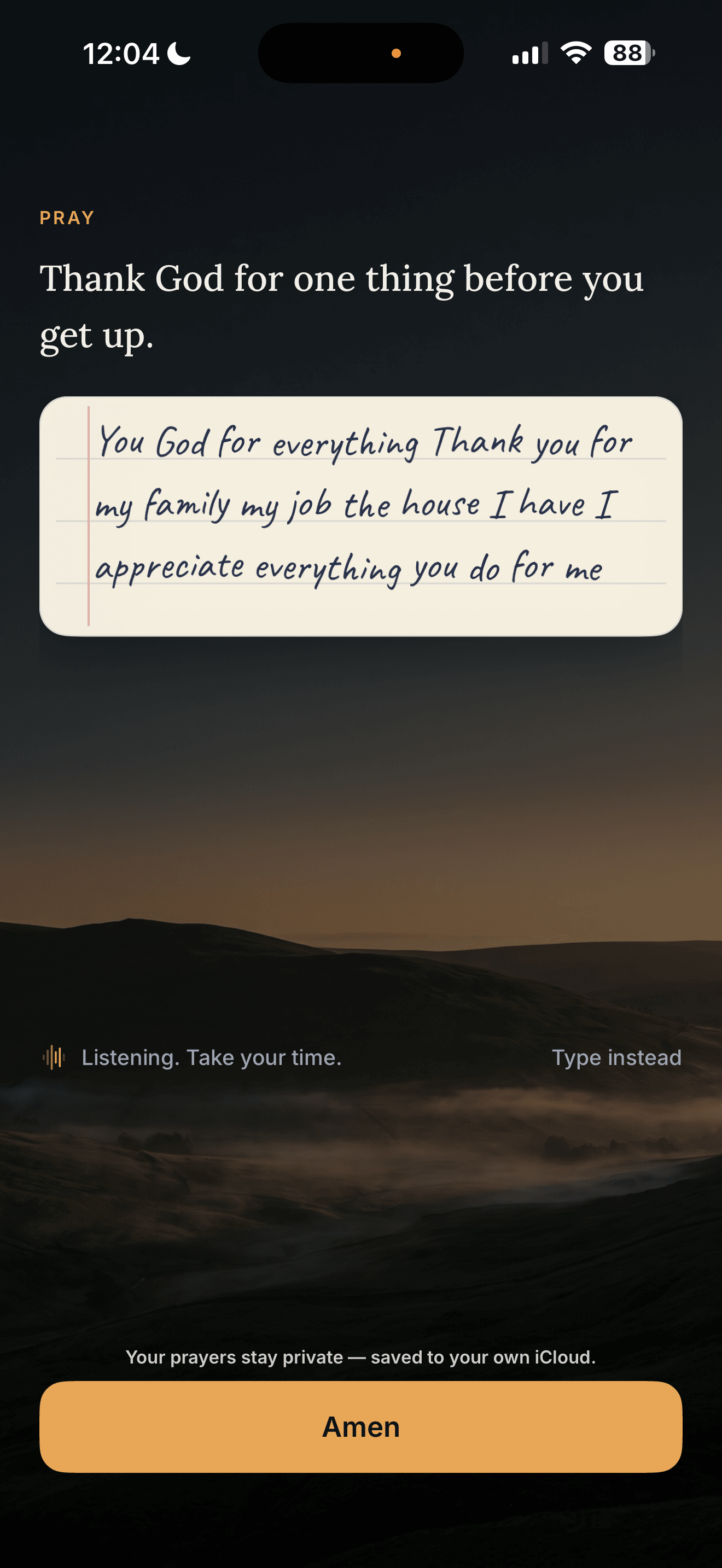
Frequently asked questions
What is Psalm 46 about?
Psalm 46 is a song of trust from the sons of Korah. It declares that God is our refuge and strength in trouble, describes a river that makes the city of God glad, promises God's help "right early," and ends with God's call to "Be still, and know that I am God."
What does "Be still, and know that I am God" mean?
In Psalm 46:10, God calls his people to stop striving and fearing and to recognize that he is God. It is less about being physically quiet and more about trusting him to be in control, even when the world is in uproar.
What does "God shall help her, and that right early" mean?
Verse 5 says God is in the midst of his city and will help it "right early," which suggests help arriving at the break of day. It is a reason to bring your first thoughts of the morning to God.
How can I pray Psalm 46 every morning?
Read verse 1 and name what you are facing, ask for God's help early from verse 5, repeat "The LORD of hosts is with us" from verse 7, and then sit quietly for a minute with verse 10. A Bible verse alarm can help you remember.
Sources and fact checks
- 01Psalm 46 (KJV) — Verbatim quotation checked on Bible Gateway, King James Bible Online and Bible Hub 2026-11-20 (11/11). Divine name rendered LORD (KJV small-caps / YHWH). KJV public domain in the U.S. Superscription from KJBO/Bible Hub. Selah after vv. 3, 7 and 11.
- 02Psalms Chapter 46, King James Bible Online — 11/11 verse match and superscription, checked 2026-11-20.