Prayer
Psalm 27: The Lord Is My Light and My Salvation
Quick answer
Psalm 27 is a psalm of trust that its superscription attributes to David. It moves from bold confidence ("whom shall I fear?") to an honest plea for God not to hide his face, and it ends with a call to "Wait on the LORD."
Psalm 27 opens with one of the most loved lines in Scripture: "The LORD is my light and my salvation; whom shall I fear?" It sounds like the voice of someone who has never been afraid. But keep reading and the psalm changes. The same voice that started so boldly begins to plead: hear me, don't hide your face, don't leave me. Then it closes with a quiet instruction to wait. That honesty is why so many people return to Psalm 27. It makes room for confidence and fear in the same prayer. Below you'll find the whole psalm, what each part means, and simple ways to pray it as your day begins.
Psalm 27 (KJV) full text
Here is the whole psalm, quoted from the King James Version.
1 The LORD is my light and my salvation; whom shall I fear? the LORD is the strength of my life; of whom shall I be afraid?
2 When the wicked, even mine enemies and my foes, came upon me to eat up my flesh, they stumbled and fell.
3 Though an host should encamp against me, my heart shall not fear: though war should rise against me, in this will I be confident.
4 One thing have I desired of the LORD, that will I seek after; that I may dwell in the house of the LORD all the days of my life, to behold the beauty of the LORD, and to enquire in his temple.
5 For in the time of trouble he shall hide me in his pavilion: in the secret of his tabernacle shall he hide me; he shall set me up upon a rock.
6 And now shall mine head be lifted up above mine enemies round about me: therefore will I offer in his tabernacle sacrifices of joy; I will sing, yea, I will sing praises unto the LORD.
7 Hear, O LORD, when I cry with my voice: have mercy also upon me, and answer me.
8 When thou saidst, Seek ye my face; my heart said unto thee, Thy face, LORD, will I seek.
9 Hide not thy face far from me; put not thy servant away in anger: thou hast been my help; leave me not, neither forsake me, O God of my salvation.
10 When my father and my mother forsake me, then the LORD will take me up.
11 Teach me thy way, O LORD, and lead me in a plain path, because of mine enemies.
12 Deliver me not over unto the will of mine enemies: for false witnesses are risen up against me, and such as breathe out cruelty.
13 I had fainted, unless I had believed to see the goodness of the LORD in the land of the living.
14 Wait on the LORD: be of good courage, and he shall strengthen thine heart: wait, I say, on the LORD.
What Psalm 27 means, section by section
Verses 1–3: Confidence. The psalm begins with three names for God: light, salvation and strength. Light shows the way in the dark, salvation rescues, and strength holds you up. Because God is all three, the psalmist asks twice who there is to fear. Verses 2 and 3 picture enemies and even an army camped nearby, and still the answer is the same: "my heart shall not fear." This isn't a claim that nothing bad will happen. It's trust in who God is when something bad does.
Verses 4–6: One thing. In the middle of danger, the psalmist names a single desire: to dwell in the house of the LORD, to behold his beauty and to enquire in his temple. Out of everything that could be asked for, the request is to be near God. Verses 5 and 6 describe what that nearness means in trouble: being hidden in his pavilion, set high on a rock, and finally singing praises. Seeking God comes first, and safety and joy follow from it.
Verses 7–12: The prayer for help. Here the tone shifts. "Hear, O LORD, when I cry with my voice." The psalmist remembers God's invitation, "Seek ye my face," and answers it: "Thy face, LORD, will I seek." Then come the honest fears: don't hide your face, don't put me away, don't leave me. Verse 10 is one of the tenderest lines in the Psalms: even if father and mother forsake me, the LORD will take me up. The section ends asking to be taught God's way and led on a plain path, away from false witnesses.
Verses 13–14: Wait on the LORD. The psalmist admits they would have fainted if they hadn't believed they would see God's goodness "in the land of the living," meaning in this life, not only someday. The last verse turns to the reader: wait on the LORD, be of good courage, and he will strengthen your heart. Then it says it again: "wait, I say, on the LORD." Waiting here isn't passive. It's choosing to keep trusting while you don't yet see the answer.
Why Psalm 27 fits the morning
Psalm 27 begins with light, and morning is when light returns. Praying "The LORD is my light" as the day starts is a way of naming who will guide you before the day's noise begins. The psalm's central longing, to seek God's face, fits the first quiet minutes of the day too, before messages and plans take over. And the closing call to "be of good courage" is exactly what many of us need before we walk into a hard meeting, a long shift or an uncertain conversation.
If you already pray in the morning, Psalm 27 sits well next to a short morning prayer. For a broader rhythm, see how to pray the Psalms in the morning.
How to pray Psalm 27
You don't need special words. Let the psalm lead you:
- Read it slowly, out loud if you can. Notice which line catches you today.
- Pray verse 1 as your own: "Lord, you are my light and my salvation. Whom shall I fear?"
- Name what you're afraid of, honestly, the way verses 7–12 do.
- Ask for the "one thing" of verse 4: to be near God today, more than anything else you want.
- End with verse 14. Choose to wait on God with courage, and write down one line to carry through the day.
Here is a short prayer you can use:
Lord, you are my light and my salvation. Today I don't know everything that's coming, but I know you. When I'm afraid, remind me whose I am. More than anything, I want to be near you and to seek your face. Teach me your way and lead me on a plain path. Give me courage, strengthen my heart, and help me wait on you. Amen.
Psalm 27 when you feel afraid
Psalm 27 doesn't pretend fear isn't real. The psalmist names armies, enemies, false witnesses and the fear of being abandoned. What the psalm offers is a place to bring those fears: to God, who is light and strength. Many people read it on mornings when anxiety arrives before they're even out of bed. If that's you, our guide to a morning prayer for anxiety before work walks through simple steps for those first minutes. Prayer can bring real comfort, and if your anxiety is heavy or doesn't lift, it's also wise to talk with someone you trust or a qualified professional.
For other psalms of trust, read Psalm 23, Psalm 91 and Psalm 121. If evenings are harder than mornings, a night prayer can help you end the day in the same trust.
Build the habit with Koum
Koum is a Bible verse alarm clock built for mornings with God. Your alarm doesn't stop at a button. It stops when you prove the day's verse by scanning an open physical Bible, speaking it aloud or typing it. There's no snooze, and with the Chase setting, "If you give up," Koum can call you back until you prove the verse. Then your Morning opens into Prayer, Devotional and Journal.
Koum has a built-in Bible, so after your alarm you can open Psalm 27, pray it in the Prayer step and save the line that stayed with you in your prayer journal. Your prayers and journal stay in your private iCloud, and you don't need an account to get started. To set it up, read how to set up a Bible alarm for morning reading, or see our guide to choosing a Christian alarm clock app. Wake up to Scripture with Koum.
Put this into practice with Koum.
Koum asks you to open, scan, speak, or type a Bible verse before the alarm ends. Then it gives the morning room for prayer, a devotional, and a private reflection.
Get Koum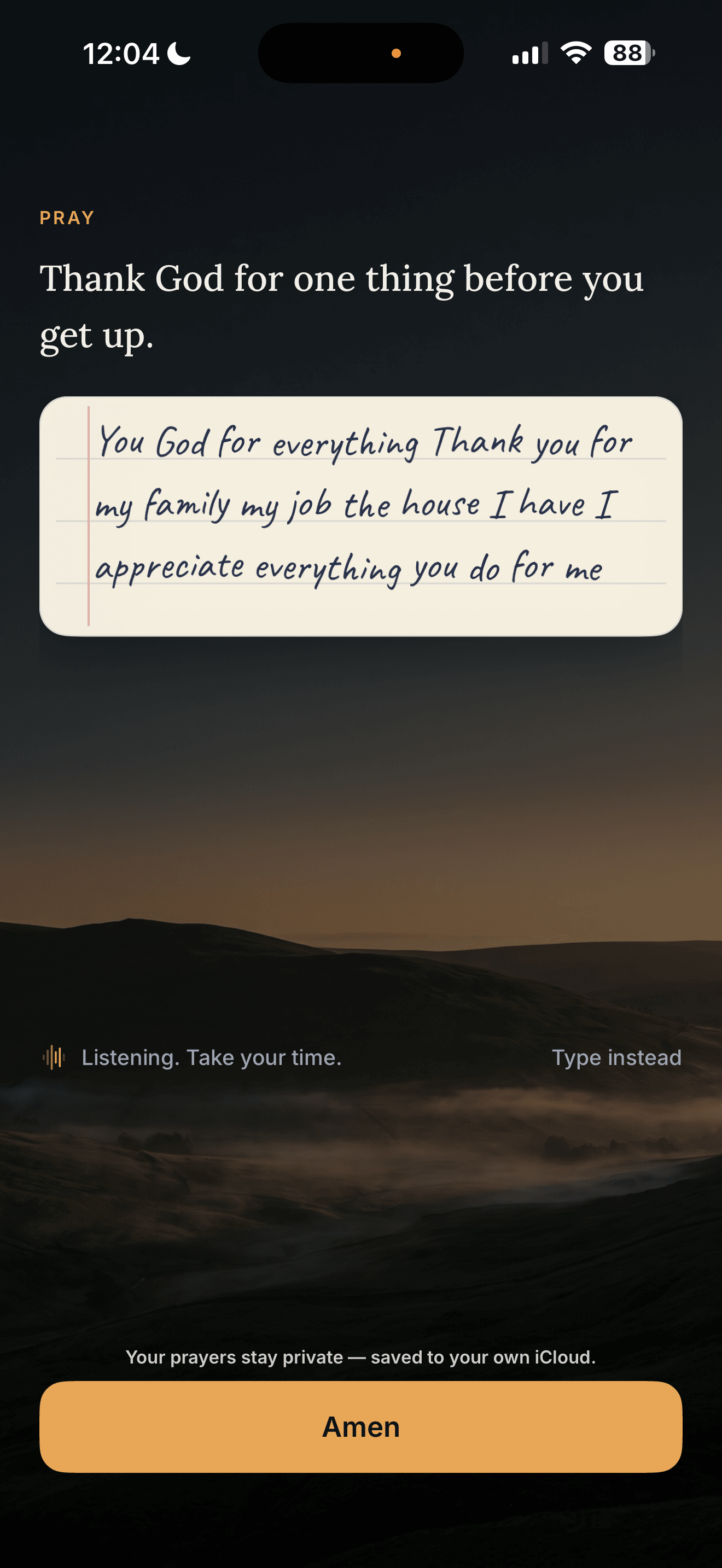
Frequently asked questions
Who wrote Psalm 27?
The psalm's superscription attributes it to David. It doesn't say when or in what circumstances it was written.
What is the main message of Psalm 27?
Trust in God when you're afraid. The psalm says the LORD is your light, salvation and strength, invites you to seek his face above everything else, and ends with a call to wait on him with courage.
What does "wait on the LORD" mean?
It means to keep trusting God while you don't yet see the answer. In Psalm 27:14 it's paired with "be of good courage," so it's an active choice to stay hopeful, not just sitting still.
Is Psalm 27 good for anxiety?
Many people pray Psalm 27 when they feel anxious, because it names fear honestly and points to God as light and strength. It can be a real comfort, though it isn't a replacement for medical or professional care when you need it.
Sources and fact checks
- 01Psalm 27 (KJV) — Verbatim quotation checked on Bible Gateway 2026-11-02.
- 02Koum on the App Store — Supports Koum feature and privacy statements (same wording as the Psalm 121 post).