Prayer
Psalm 34: I Will Bless the LORD at All Times
Quick answer
Psalm 34 is David's song of thanks after God delivered him from danger. It praises God, invites others to "taste and see that the LORD is good," and teaches that the LORD is near the brokenhearted. Its first line, "I will bless the LORD at all times," makes a natural first prayer of the day.
Psalm 34 begins before anything else in the day has a chance to speak: "I will bless the LORD at all times." It is the song of someone who was afraid, called out to God, and was heard. Instead of keeping that relief private, the psalmist turns it into praise and then into an invitation for others to trust God too.
The psalm's heading in the King James Version ties it to a dangerous moment in David's life. From there it moves from personal thanks, to a warm invitation ("O taste and see that the LORD is good"), to simple teaching about how to live, and finally to a promise that God stays close to people who are hurting.
Below you will find the full KJV text, a section-by-section reading, and a simple way to pray Psalm 34 as you begin your day.
Psalm 34 (KJV) full text
A Psalm of David, when he changed his behaviour before Abimelech; who drove him away, and he departed.
1 I will bless the LORD at all times: his praise shall continually be in my mouth.
2 My soul shall make her boast in the LORD: the humble shall hear thereof, and be glad.
3 O magnify the LORD with me, and let us exalt his name together.
4 I sought the LORD, and he heard me, and delivered me from all my fears.
5 They looked unto him, and were lightened: and their faces were not ashamed.
6 This poor man cried, and the LORD heard him, and saved him out of all his troubles.
7 The angel of the LORD encampeth round about them that fear him, and delivereth them.
8 O taste and see that the LORD is good: blessed is the man that trusteth in him.
9 O fear the LORD, ye his saints: for there is no want to them that fear him.
10 The young lions do lack, and suffer hunger: but they that seek the LORD shall not want any good thing.
11 Come, ye children, hearken unto me: I will teach you the fear of the LORD.
12 What man is he that desireth life, and loveth many days, that he may see good?
13 Keep thy tongue from evil, and thy lips from speaking guile.
14 Depart from evil, and do good; seek peace, and pursue it.
15 The eyes of the LORD are upon the righteous, and his ears are open unto their cry.
16 The face of the LORD is against them that do evil, to cut off the remembrance of them from the earth.
17 The righteous cry, and the LORD heareth, and delivereth them out of all their troubles.
18 The LORD is nigh unto them that are of a broken heart; and saveth such as be of a contrite spirit.
19 Many are the afflictions of the righteous: but the LORD delivereth him out of them all.
20 He keepeth all his bones: not one of them is broken.
21 Evil shall slay the wicked: and they that hate the righteous shall be desolate.
22 The LORD redeemeth the soul of his servants: and none of them that trust in him shall be desolate.
What Psalm 34 means, section by section
The heading. The KJV heading links the psalm to the time David "changed his behaviour before Abimelech." The story is told in 1 Samuel 21:10–15, where David, running from Saul, pretends to be mad in front of the king of Gath so he can get away. In 1 Samuel that king is called Achish, and Abimelech is generally understood as another name or title for him. Either way, the psalm comes out of real fear and a narrow escape.
Verses 1–3: praise at all times. The psalm starts with a decision, not a feeling: "I will bless the LORD at all times." Praise is not saved for the good days. Then the psalmist turns outward. The humble will hear and be glad, and everyone is invited in: "O magnify the LORD with me, and let us exalt his name together." Gratitude grows when it is shared.
Verses 4–7: heard and delivered. Here is the testimony behind the praise: "I sought the LORD, and he heard me, and delivered me from all my fears." The psalmist calls himself "this poor man," someone with nothing to bargain with, and still God listened. Those who look to God are "lightened," their faces no longer covered with shame. Verse 7 adds a picture of protection: the angel of the LORD camps around those who fear him.
Verses 8–10: taste and see. Verse 8 is an invitation to experience God's goodness for yourself, not just to hear about it. Verse 10 says those who seek the LORD "shall not want any good thing." This is not a promise of wealth or an easy life. The rest of the psalm openly admits that the righteous have many troubles. It is a promise that people who seek God will not lack the good he knows they need, even when strong "young lions" go hungry.
Verses 11–14: a lesson for life. The tone shifts from song to teaching, like a parent speaking to children. Do you want a full life? Then guard your tongue from evil and your lips from lies, turn from evil and do good, and "seek peace, and pursue it." Peace here is something you go after on purpose. This teaching fits the psalm's form: in Hebrew, Psalm 34 is written as an acrostic, with its verses following the order of the Hebrew alphabet, a carefully crafted shape that suits teaching meant to be remembered.
Verses 15–22: near the brokenhearted. God's eyes are on the righteous and his ears are open to their cry. Verse 18 is one of the tenderest lines in the Psalms: "The LORD is nigh unto them that are of a broken heart." Verse 19 is honest that troubles are real, "Many are the afflictions of the righteous," and just as honest that they are not the final word. Verse 20, "He keepeth all his bones: not one of them is broken," is echoed in John 19:36 at the crucifixion of Jesus. The psalm ends with redemption: none who trust in God will be left desolate.
Why Psalm 34 fits the morning
"At all times" has to start somewhere, and the first waking moment is a natural place. Before the phone, the news, or the to-do list, verse 1 gives you words that turn your attention to God. Verse 4 then gives you a pattern for the rest of the morning: seek the LORD, bring him your fears, and trust that he hears.
If you are new to praying Scripture at the start of the day, our guide on how to pray the Psalms in the morning walks through a simple routine, and our collection of morning prayers offers short words for busy days. You can also meditate on Scripture in the morning by staying with a single verse, such as verse 1 or verse 8.
How to pray Psalm 34
Five quiet minutes are enough to begin.
- Start with verse 1. Say it out loud as your first words of the day: "I will bless the LORD at all times."
- Name one reason for thanks. Think of one specific way God has helped you, recently or long ago, and thank him for it.
- Bring your fears. Pray verse 4 in your own words. Tell God what worries you about today, and ask him to deliver you from fear.
- Choose one practice from verses 13–14. Ask for help to guard your words or to seek peace in one relationship today.
- Carry one phrase with you. Pick a short line to return to during the day, such as "taste and see that the LORD is good." You might memorize a Bible verse in the morning using that line. You can also write it in a prayer journal.
A short sample prayer:
"Lord, before anything else today, I want to bless you. Thank you for hearing me when I call and for staying close when I am afraid. Help me taste and see your goodness in ordinary moments. Guard my words, make me someone who seeks peace, and keep me near you when this day feels heavy. I trust you with all of it. Amen."
Psalm 34 when you're afraid or brokenhearted
Some mornings begin with dread before your feet touch the floor. Psalm 34 was written by someone who knew that feeling. Verse 4 does not pretend fear is absent; it says God delivered the psalmist "from all my fears." Verse 18 goes further and meets you in grief or disappointment: the LORD is near the brokenhearted and saves those who are crushed in spirit.
The psalm does not promise that hard things will vanish by lunchtime. It promises presence and a final rescue, and it invites you to cry out honestly while you wait. If anxiety about the day ahead feels heavy, try this morning prayer for anxiety before work. If prayer itself feels empty right now, our guide on how to pray when you feel spiritually dry offers small, grace-filled steps.
Other psalms can walk with you too. Psalm 23 and Psalm 121 speak of God's care and keeping, Psalm 91 and Psalm 27 of refuge and courage, Psalm 139 of being fully known, Psalm 51 of confession and a clean heart, and Psalm 1 of a rooted life. At the end of the day, a short night prayer can close what Psalm 34 opens in the morning.
Build the habit with Koum
A morning habit is easier when Scripture is the first thing you meet. Koum is a Bible verse alarm clock: you wake up to a verse and can set up a simple morning reading and prayer routine.
To begin, follow our guide to setting up a Bible alarm for morning reading. You can also read more about using a Christian alarm clock app. Then, when the alarm sounds, open Psalm 34 and let its first line be your first prayer: I will bless the LORD at all times.
Put this into practice with Koum.
Koum asks you to open, scan, speak, or type a Bible verse before the alarm ends. Then it gives the morning room for prayer, a devotional, and a private reflection.
Get Koum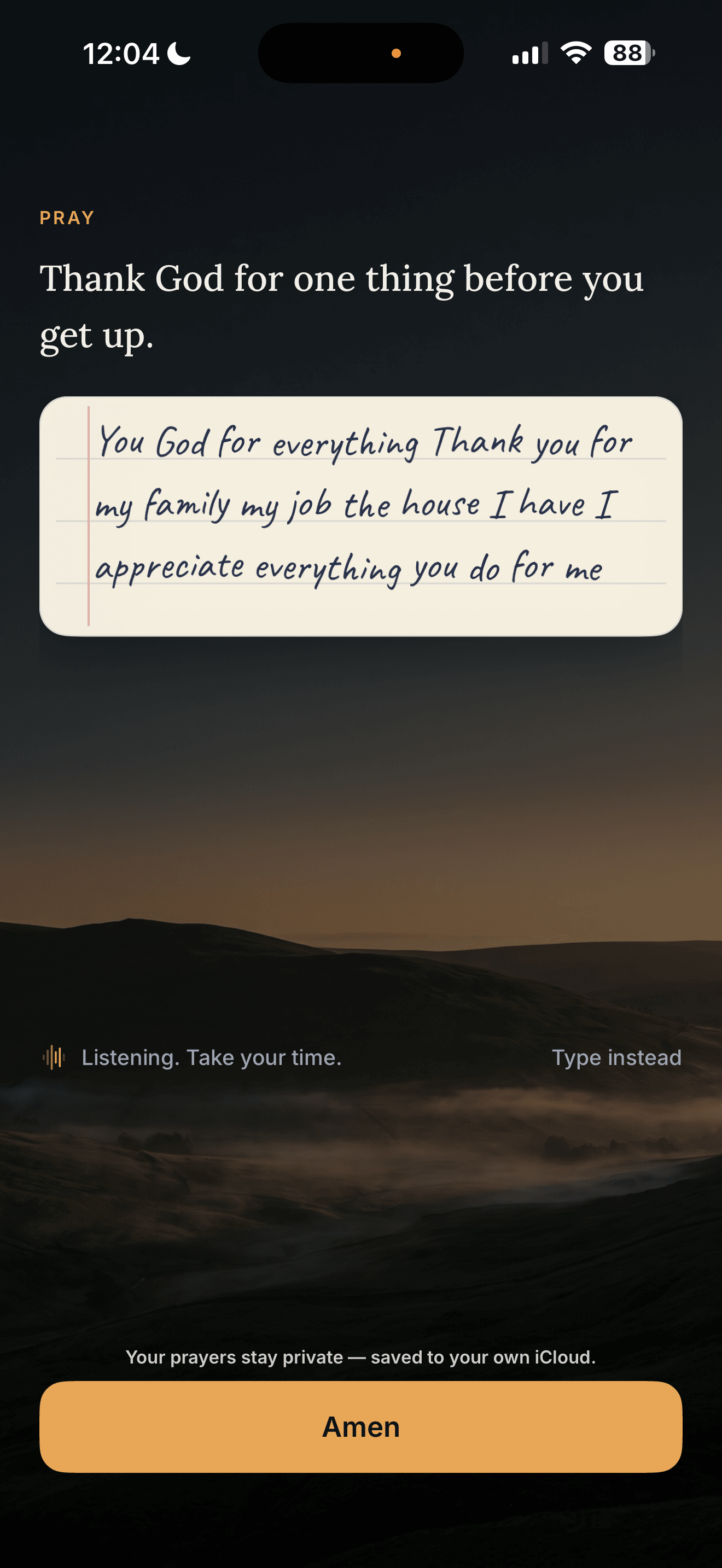
Frequently asked questions
What is Psalm 34 about?
Psalm 34 is a song of thanks from David after God delivered him from danger. It praises God, invites others to trust him, teaches how to live (guard your words, do good, seek peace), and promises that the LORD is near the brokenhearted.
What does "taste and see that the LORD is good" mean?
Verse 8 invites you to experience God's goodness for yourself, not just to hear about it from others. Like tasting food, trusting God is personal, and the verse adds that the one who trusts in him is blessed.
Does Psalm 34 promise that believers won't suffer?
No. Verse 19 says plainly, "Many are the afflictions of the righteous." The promise is that the LORD is near in those troubles and delivers his people out of them in his time. The psalm makes room for honest pain and steady hope at the same time.
How can I pray Psalm 34 in the morning?
Begin with verse 1 as your first words of the day, thank God for one specific thing, bring your fears to him with verse 4, and carry one phrase, such as "taste and see that the LORD is good," with you through the day.
Sources and fact checks
- 01Psalm 34 (KJV) — Verbatim quotation checked on Bible Gateway 2026-11-11 (22/22). Divine name rendered LORD (KJV small-caps / YHWH). KJV public domain in the U.S.
- 02Psalm 34 (KJV) on King James Bible Online — Confirms superscription and LORD rendering. Checked 2026-11-11.
- 03Koum on the App Store — Supports Koum feature statements.