Koum product guide · Updated
Bible alarm versus regular alarm: which fits your morning?
A regular alarm tells you when to wake up; a Bible alarm such as Koum connects that moment to a Scripture task. Choose a Bible alarm if the gap between dismissing the alarm and opening Scripture is your main difficulty. Keep a regular alarm if your existing routine works or you prefer to read later.
See Koum’s alarm flow →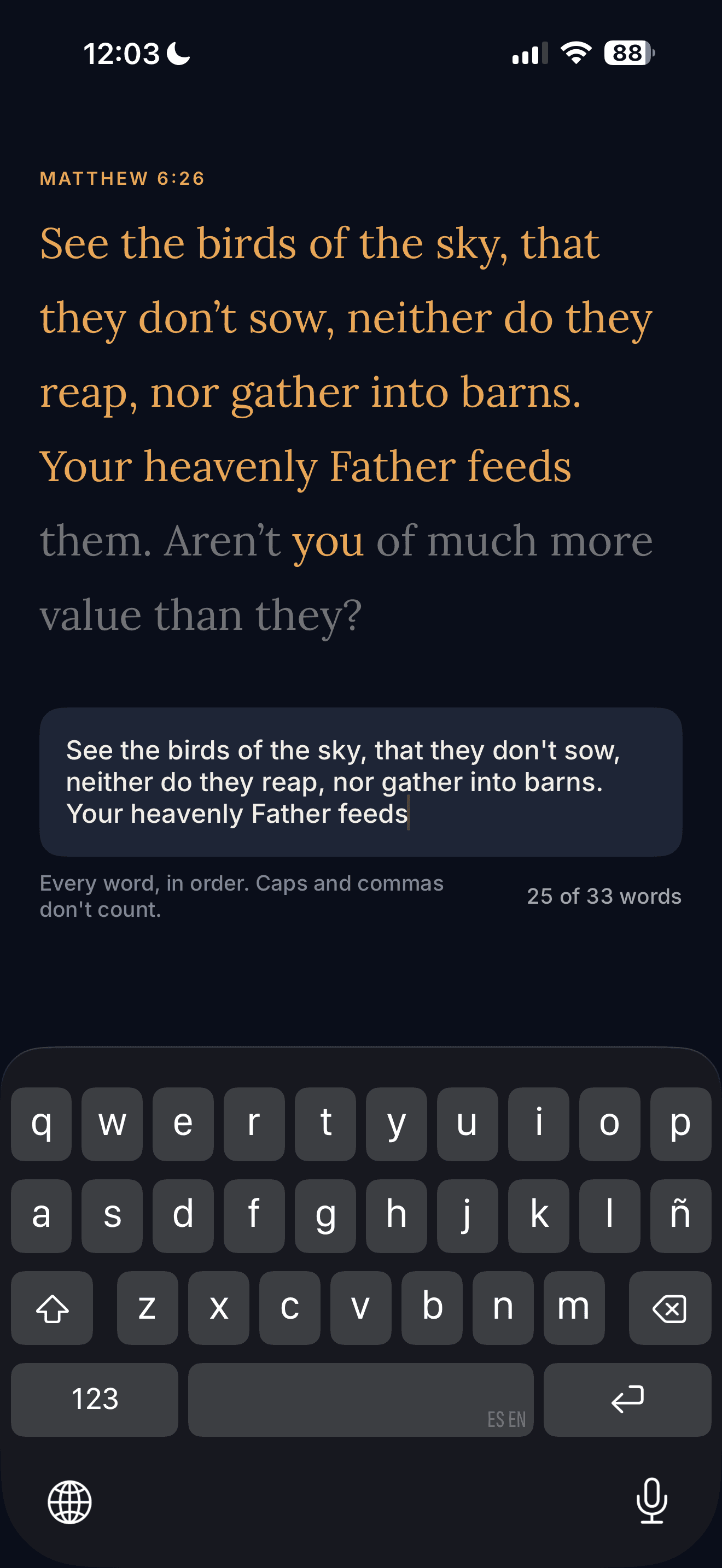
Compare your options
| Option | A useful fit when… | Keep in mind |
|---|---|---|
| Regular alarm | Your next step is already clear or reading happens later. | No built-in Scripture transition. |
| Koum Bible alarm | You want scan, speak, or type to prompt the first step. | The task must suit your device and surroundings. |
| Separate reading reminder | Your quiet time needs a different schedule. | You must respond to a second cue. |
Compare the transition, not just the sound
Two alarms can ring at the same time but lead to different next actions. With a regular alarm, you decide what happens after dismissal. With Koum, a scan, speech, or typing task brings Scripture into that transition. Neither choice makes a person more sincere. The practical distinction is whether an explicit prompt helps you do what you already intend to do.
When a regular alarm is enough
If you already reach for a Bible after waking, adding another task may offer little benefit. A regular alarm is also a reasonable option when you share a quiet room, keep your phone away from your reading space, or prefer a separate reading time. You can prepare a passage and a physical reminder the night before without changing your alarm app.
When a Bible alarm may help
Koum may fit if you often dismiss an alarm and immediately drift into unrelated apps. A short Scripture task gives you a concrete first action. Choose scan, speak, or type according to your surroundings and test it before the next morning. The intended benefit is a more deliberate transition, not a guarantee that distraction disappears or that a habit will form within a set number of days.
When to separate waking and devotional time
A parent, shift worker, or someone sharing a sleeping space may need a flexible reading time. In that case, waking and prayer do not need to happen in the same app or at the same minute. A separate reminder can point to a passage later. Start from the time you can realistically protect, rather than forcing a schedule that repeatedly interrupts the people around you.
Try one change and review it
Choose a small experiment: prepare tomorrow’s passage, select one suitable task, and notice whether it helps you begin. If the task becomes frustrating, simplify it or return to a regular alarm. Keep a backup when you must wake for an important commitment. Review compatibility, purchase terms, and privacy before installing an app; this comparison does not establish current prices or claim that one method works for everyone.
Common questions
Do I need a Bible alarm to build a prayer habit?
No. A physical reminder, a regular alarm, or a prepared reading place may work. Choose the cue you can realistically follow.
Can I use a Bible alarm and still read a physical Bible?
Yes. An app can prompt the start of your routine while your reading and reflection happen away from the screen.