Prayer
Psalm 51: Create in Me a Clean Heart, O God
Quick answer
Psalm 51 is David's prayer of repentance. Its superscription ties it to the prophet Nathan coming to David after Bathsheba. The psalm moves from honest confession to a plea for a clean heart, and it ends in restored joy and praise.
Some prayers are easy to say. Psalm 51 isn't one of them. It begins with no excuses: "Have mercy upon me, O God." It names sin plainly, owns it completely, and asks God to do what no one can do for themselves: wash, cleanse and create a new heart. And yet the psalm doesn't end in despair. It ends in joy, open lips and praise. That's why so many people return to Psalm 51 when they need a fresh start. It shows that honesty before God isn't the end of the story. It's where mercy begins. Below you'll find the whole psalm, what each part means, and simple ways to pray it as your day begins.
Psalm 51 (KJV) full text
Here is the whole psalm, quoted from the King James Version, beginning with its superscription.
To the chief Musician, A Psalm of David, when Nathan the prophet came unto him, after he had gone in to Bathsheba.
1 Have mercy upon me, O God, according to thy lovingkindness: according unto the multitude of thy tender mercies blot out my transgressions.
2 Wash me throughly from mine iniquity, and cleanse me from my sin.
3 For I acknowledge my transgressions: and my sin is ever before me.
4 Against thee, thee only, have I sinned, and done this evil in thy sight: that thou mightest be justified when thou speakest, and be clear when thou judgest.
5 Behold, I was shapen in iniquity; and in sin did my mother conceive me.
6 Behold, thou desirest truth in the inward parts: and in the hidden part thou shalt make me to know wisdom.
7 Purge me with hyssop, and I shall be clean: wash me, and I shall be whiter than snow.
8 Make me to hear joy and gladness; that the bones which thou hast broken may rejoice.
9 Hide thy face from my sins, and blot out all mine iniquities.
10 Create in me a clean heart, O God; and renew a right spirit within me.
11 Cast me not away from thy presence; and take not thy holy spirit from me.
12 Restore unto me the joy of thy salvation; and uphold me with thy free spirit.
13 Then will I teach transgressors thy ways; and sinners shall be converted unto thee.
14 Deliver me from bloodguiltiness, O God, thou God of my salvation: and my tongue shall sing aloud of thy righteousness.
15 O Lord, open thou my lips; and my mouth shall shew forth thy praise.
16 For thou desirest not sacrifice; else would I give it: thou delightest not in burnt offering.
17 The sacrifices of God are a broken spirit: a broken and a contrite heart, O God, thou wilt not despise.
18 Do good in thy good pleasure unto Zion: build thou the walls of Jerusalem.
19 Then shalt thou be pleased with the sacrifices of righteousness, with burnt offering and whole burnt offering: then shall they offer bullocks upon thine altar.
What Psalm 51 means, section by section
Verses 1–6: Confession. David starts not with his sin but with God's character: lovingkindness and "the multitude of thy tender mercies." He asks for mercy because of who God is, not because of anything he has earned. Then he uses three words for what he has done, transgressions, iniquity and sin, and three words for what he needs: blot out, wash, cleanse. Verse 4 is the heart of the confession: "Against thee, thee only, have I sinned." David had wronged people deeply, but he sees that every sin is first a break with God. Verse 6 adds that God wants truth "in the inward parts." Real repentance isn't only about behavior. It reaches all the way inside.
Verses 7–12: Cleansing and renewal. Now the prayer turns from confession to hope. "Purge me with hyssop" recalls the hyssop used to sprinkle blood or water in Israel's cleansing rites (Leviticus 14; Numbers 19), and David trusts that God can make him "whiter than snow." Verse 10 is the line many people know by heart: "Create in me a clean heart, O God; and renew a right spirit within me." The word create matters. David isn't asking God to patch up his old heart. He's asking for something only God can make. Verses 11 and 12 show what he fears losing most: not his position, but God's presence and "the joy of thy salvation."
Verses 13–17: Teaching others and a contrite heart. Forgiveness doesn't stay private. David promises to teach others God's ways and to sing aloud of God's righteousness. "O Lord, open thou my lips" is a prayer that God would give him words of praise again. Then comes one of the most freeing lines in the Psalms: God doesn't want empty ritual. "A broken and a contrite heart, O God, thou wilt not despise." You don't have to fix yourself before coming to God. A humble, honest heart is the offering he welcomes.
Verses 18–19: Prayer for Zion. The psalm closes by widening its view from one person to the whole community. David asks God to do good to Zion and build the walls of Jerusalem. When hearts are made right, worship is made right too, and the sacrifices become "sacrifices of righteousness." Personal repentance leads back into shared worship.
Why Psalm 51 fits the morning
Every morning is a chance to start again. Lamentations 3:22–23 says the Lord's compassions "fail not" and "are new every morning," and Psalm 51 is a way to receive that mercy at the very start of the day. Praying it before the day's noise begins lets you set things right with God first, rather than carrying yesterday's failures into today. It also keeps the day honest. Asking God for "truth in the inward parts" in the morning shapes how you speak and act long after you've closed your Bible.
If you already pray in the morning, Psalm 51 sits well next to a short morning prayer. For a broader rhythm, see how to pray the Psalms in the morning, and our guide to praying before and after reading the Bible.
How to pray Psalm 51
You don't need special words. Let the psalm lead you:
- Begin with God's mercy, the way verse 1 does. Thank him for his lovingkindness before you say anything else.
- Be honest. Name, simply and without excuses, anything you need to confess.
- Pray verse 10 as your own: "Create in me a clean heart, O God; and renew a right spirit within me."
- Ask for the joy of verse 12. Forgiveness isn't only relief. It's joy restored.
- End with verse 15. Ask God to open your lips, and choose one way to share his goodness today.
Here is a short prayer you can use:
Lord, have mercy on me according to your lovingkindness. You know my heart better than I do. Where I have wronged you or others, I don't want to hide it. Wash me and make me clean. Create in me a clean heart, O God, and renew a right spirit within me. Don't let me go from your presence. Give me back the joy of your salvation, and open my lips today to speak of your goodness. Amen.
If it helps to remember the words, try learning verse 10 by heart with our guide to memorizing a Bible verse in the morning.
Psalm 51 when you carry guilt
Some people avoid Psalm 51 because it feels heavy. But the psalm isn't written to shame you. It's written to bring you home. David doesn't stay in his guilt. He brings it to God and asks to be made clean, and the psalm's last word is not condemnation but praise. If you're carrying something you regret, Psalm 51 gives you words when you have none: be honest, ask for mercy, and trust that a broken and contrite heart is never turned away.
If prayer feels empty right now, you're not alone. Our guide on how to pray when you feel spiritually dry offers gentle next steps. Writing your prayer down can also help, and a prayer journal gives you a place to look back and see how God has answered.
For other psalms to pray, read Psalm 23, Psalm 27, Psalm 91 and Psalm 121. If evenings are harder than mornings, a night prayer can help you end the day in the same trust.
Build the habit with Koum
Koum is a Bible verse alarm clock built for mornings with God. Your alarm doesn't stop at a button. It stops when you prove the day's verse by scanning an open physical Bible, speaking it aloud or typing it. There's no snooze, and with the Chase setting, "If you give up," Koum can call you back until you prove the verse. Then your Morning opens into Prayer, Devotional and Journal.
Koum has a built-in Bible, so after your alarm you can open Psalm 51, pray it in the Prayer step and save the line that stayed with you in your journal. Your prayers and journal stay in your private iCloud, and you don't need an account to get started. To get started, read how to set up a Bible alarm for morning reading, or see our guide to choosing a Christian alarm clock app. Wake up to Scripture with Koum.
Put this into practice with Koum.
Koum asks you to open, scan, speak, or type a Bible verse before the alarm ends. Then it gives the morning room for prayer, a devotional, and a private reflection.
Get Koum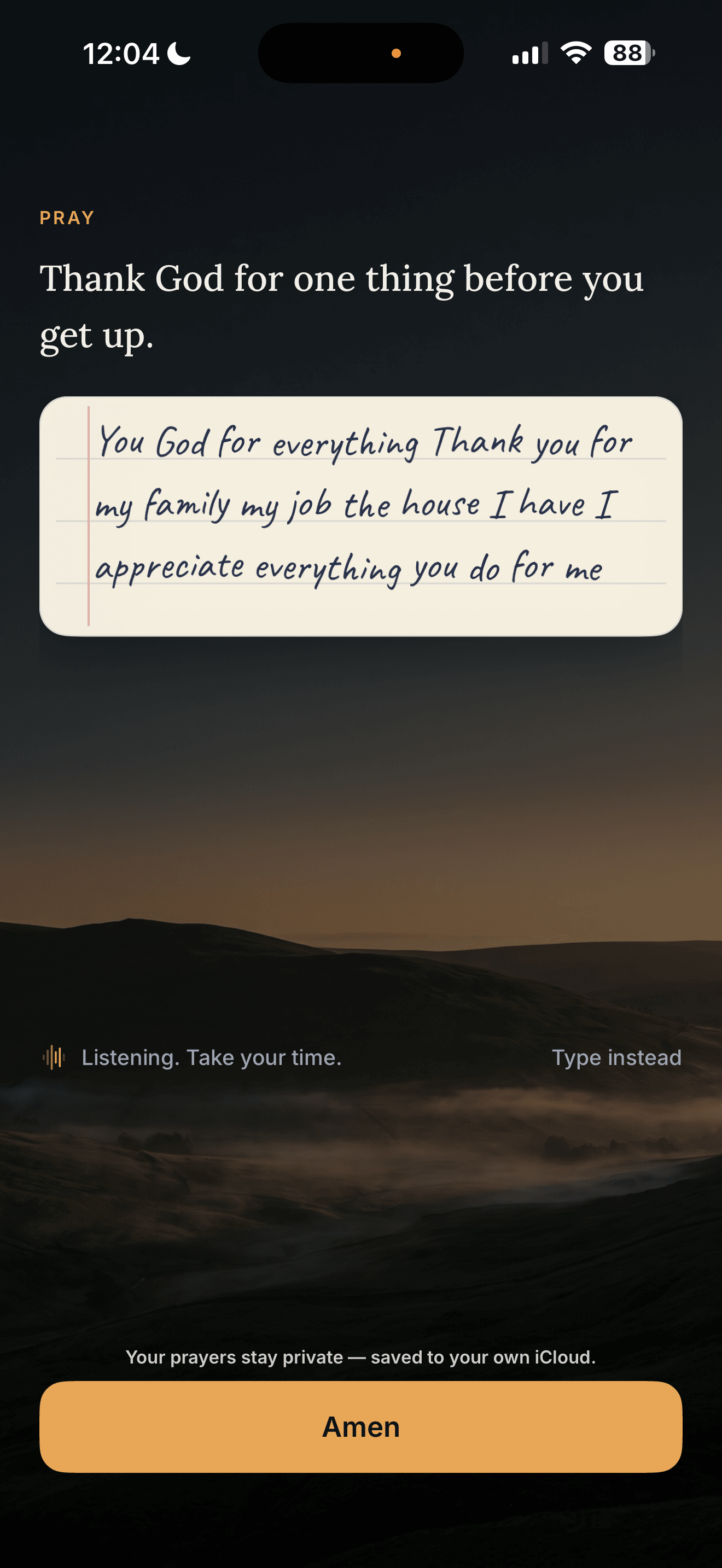
Frequently asked questions
Why did David write Psalm 51?
The psalm's superscription says it was written when the prophet Nathan came to David after he had gone in to Bathsheba. That story is told in 2 Samuel 11–12. Psalm 51 is David's response: a prayer of confession and a plea for mercy.
What does "create in me a clean heart" mean?
In Psalm 51:10, David asks God to make a new, pure heart in him, not just to clean up the old one. It's a prayer for inner change that only God can bring, paired with a request to "renew a right spirit within me."
What does "hyssop" mean in Psalm 51?
Hyssop was used in Israel's cleansing rites to sprinkle blood or water (Leviticus 14; Numbers 19). When David prays "Purge me with hyssop" in verse 7, he's asking God to make him truly clean.
Is Psalm 51 a prayer for forgiveness?
Yes. It's one of the best-known prayers of repentance in the Bible. It confesses sin honestly, asks for mercy and cleansing, and trusts that God will not despise "a broken and a contrite heart."
Sources and fact checks
- 01Psalm 51 (KJV) — Verbatim quotation checked on Bible Gateway 2026-11-04.
- 022 Samuel 11–12 (KJV) — Verbatim quotation checked on Bible Gateway 2026-11-04.
- 03Leviticus 14:4-7; Numbers 19:6, 18 (KJV) — Verbatim quotation checked on Bible Gateway 2026-11-04.
- 04Lamentations 3:22-23 (KJV) — Verbatim quotation checked on Bible Gateway 2026-11-04.
- 05Bible Hub: Psalm 51 (KJV) — Confirms the KJV superscription (To the chief Musician, A Psalm of David…).
- 06Koum on the App Store — Supports Koum feature and privacy statements (same approved wording as the Psalm 27 post).