Bible reading
How to Set Up a Bible Alarm for Morning Scripture Reading
Quick answer
Choose a short passage the night before, set an honest wake-up time with margin, select a Scripture interaction that fits your room, and test it while awake. A Bible alarm should move you toward the open Word; after it rings, read the passage, pray a response, and keep a backup alarm for mornings with real consequences.
The best Bible alarm is small enough to lead you into Scripture without making the first minutes of the day frantic. Choose one passage before you go to sleep, set a wake-up time that leaves room to read, and decide what you will do after the alarm: read the passage, pray a response, or write one sentence. A Scripture-first alarm is a cue, not a replacement for the Bible or for prayer. If you use Koum, the current app flow asks you to open Scripture and offers ways to engage a verse before the alarm ends. The point is to move from waking to attention, then let the rest of the morning be quiet enough for God’s word to stay with you.
Start with a passage you can actually read
Set up the reading before you set up the technology. Pick a passage with a clear beginning and end: a short Psalm, a paragraph from one of the Gospels, or a section you are already studying. Do not choose an entire book simply because you want to be more disciplined. A passage you can read slowly and revisit is a better morning companion than an ambitious plan that makes you feel behind before you begin.
Mark 1:35 gives a picture of Jesus rising while it was still dark to pray in a solitary place. That scene does not prescribe one perfect hour for every Christian household. It does show the value of making intentional space before the day becomes noisy. Psalm 119:105 gives another helpful image: God’s word is a lamp for the path. Your goal is not to collect a large amount of information at sunrise. It is to bring one real portion of Scripture into the path you are about to walk.
Write down the reference the night before, place your Bible where you will see it, and decide what done means. Maybe you will read Psalm 5 once, read it again, and name one request. Maybe you will read Mark 1:29–39 and notice how the passage moves from healing to prayer. The exact passage can change; the small decision is what removes the morning search.
Choose a wake-up time that protects the practice
Work backward from the first obligation of your day. Include the time you need to get out of bed, complete the alarm cue, read the passage, pray, get dressed, eat, care for children or pets, and travel. If your Bible reading requires every spare minute to go perfectly, the alarm is too late. A fifteen-minute reading window with a calm ending is more sustainable than an hour that regularly creates stress.
A normal iPhone alarm can repeat on selected days, and Apple distinguishes a regular Clock alarm from a full sleep schedule. That is useful context when you decide whether your Scripture-first alarm should run every weekday, only on workdays, or on a one-time morning. Choose the pattern that matches your actual week. If Saturdays are unpredictable, do not create a seven-day promise and then interpret every change as failure.
Give the alarm a name that tells you what to do next, such as Read Psalm 23 or Mark 1 before work. The label is not a spiritual achievement. It is a practical handoff from the sound to the action. Keep a conventional backup alarm whenever being late could affect work, school, a flight, medication, or another serious responsibility.
Set up the Scripture-first cue
In Koum, begin with the morning alarm and the verse or passage you want to meet. The public product flow describes an alarm that goes quiet when you open the Word, followed by room to pray, read, and write. Use the setup screens available in your current build, check the requested notification and alarm permissions, and confirm that the alarm is enabled for the morning you chose. Settings can change between app versions, so follow the labels you actually see instead of relying on an old screenshot or a remembered path.
The active alarm screen is meant to make the next action obvious. The current Koum interface can ask you to scan the open page, say the verse, type it, answer Bible trivia, rebuild the verse, or complete the verse. You do not need to use the most demanding option every morning. The best mode is the one that brings you to Scripture in your real room: scanning when your Bible is open and the light is good, speaking when you can read aloud, or typing when someone else is asleep.
Before you rely on the setup, let it ring while you are awake. Make sure the phone is charged, the volume and permissions are sensible, and the Bible is where your tired self can find it. A test also lets you notice friction: perhaps the reference is too long, the phone is too far away, or the mode you chose does not fit the room. Adjust those details now rather than turning tomorrow morning into technical troubleshooting.
Choose a verse interaction that serves reading
The verification step should point toward the passage, not become a contest. If you choose scan, open the Bible to the passage and leave enough light for the camera. If you choose speak, read naturally and do not treat a sleepy voice as a moral problem. If you choose type, keep the reference or verse short enough that you will finish without resentment. The other available modes can make the wake-up more active, but activity is not the same thing as attention.
Koum’s purpose is not to prove that you are already focused. It is to give your first attention somewhere concrete to go. Once the sound stops, keep the Bible open. Read the whole selected passage before jumping to notifications. Notice who is speaking, what is repeated, what changes, and what response the text invites. If the alarm interaction takes two minutes, protect at least a few more minutes for the Scripture itself.
Do not make the alarm depend on a translation, room, or physical setup you cannot repeat. Put glasses nearby, use a large enough reference, and choose a fallback mode when you travel. A Scripture-first habit becomes gentler when it has a plan for ordinary conditions: a dark room, a sleeping partner, a child who wakes early, or a morning when the physical Bible is not beside the bed.
Turn the wake-up into a short morning rhythm
After the verse, use a simple sequence: read, notice, respond, and carry one thing into the day. Read the selected section once for its shape and a second time for a detail. Notice one phrase, command, promise, question, or example. Respond in your own words with thanksgiving, confession, a request for help, or a specific act of obedience. Then stop at a sensible time. A short prayer that answers the text is better than a hurried performance of many spiritual tasks.
Psalm 5:3 describes bringing a voice to God in the morning and watching with expectation. That can shape the tone of your routine without making you imitate another person’s schedule. Your response might be, Help me be truthful in the meeting today, or, Give me patience with my children. Keep it connected to what you actually read. The alarm starts the encounter; it does not finish the work of listening.
If you want to journal, write one sentence: I noticed, I need, or Today I will. If you use Koum’s prayer, devotional, or journal features after the alarm, let them extend the passage you opened rather than replace it. The product can create a helpful container for the first minutes, but your Bible, your prayer, and your lived response remain the substance.
Test the routine and keep a humane backup
A dependable routine is tested in the conditions in which you will use it. Try the alarm at the selected time while you are awake. Test the verification path you chose. If the app asks for a permission, grant only what you understand and need. Check the battery, notification settings, and whether the phone is placed where you can reach the Bible without opening unrelated apps. The goal is not to eliminate every surprise; it is to remove avoidable ones.
Keep another alarm when the morning carries real consequences. A Scripture-first alarm can support your devotional rhythm, but it should not be the only safeguard for a work shift, exam, airport departure, medical appointment, or someone who depends on you. Apple notes that alarms have their own settings for repeat, sound, and volume. Use those controls and a second device when the cost of missing the wake-up is high.
Review the setup after three or four mornings. Ask whether the passage was readable, whether the time left enough margin, and whether the interaction helped you move toward Scripture or made you hurry. Change one variable at a time: shorten the passage, move the alarm, choose another mode, or place the Bible somewhere more visible. You are building a path back to the Word, not grading your worth.
Let the alarm disappear behind the practice
The best result of a Bible alarm is not that you become attached to a particular alarm screen. It is that you open Scripture when the day is still becoming itself. Use the technology to create a clear first step, then give the passage your unhurried attention. Some mornings that will mean a Psalm and a sentence of prayer. Other mornings it will mean a Gospel paragraph, a difficult question, and a decision to keep studying later.
Set up tonight with tomorrow’s real life in mind: one passage, one honest time, one interaction that fits your room, and one simple response. If Koum helps you cross the distance between the alarm and the open Bible, let it do that small job well. Then put the phone down and stay with the Word.
Put this into practice with Koum.
Koum asks you to open, scan, speak, or type a Bible verse before the alarm ends. Then it gives the morning room for prayer, a devotional, and a private reflection.
Get Koum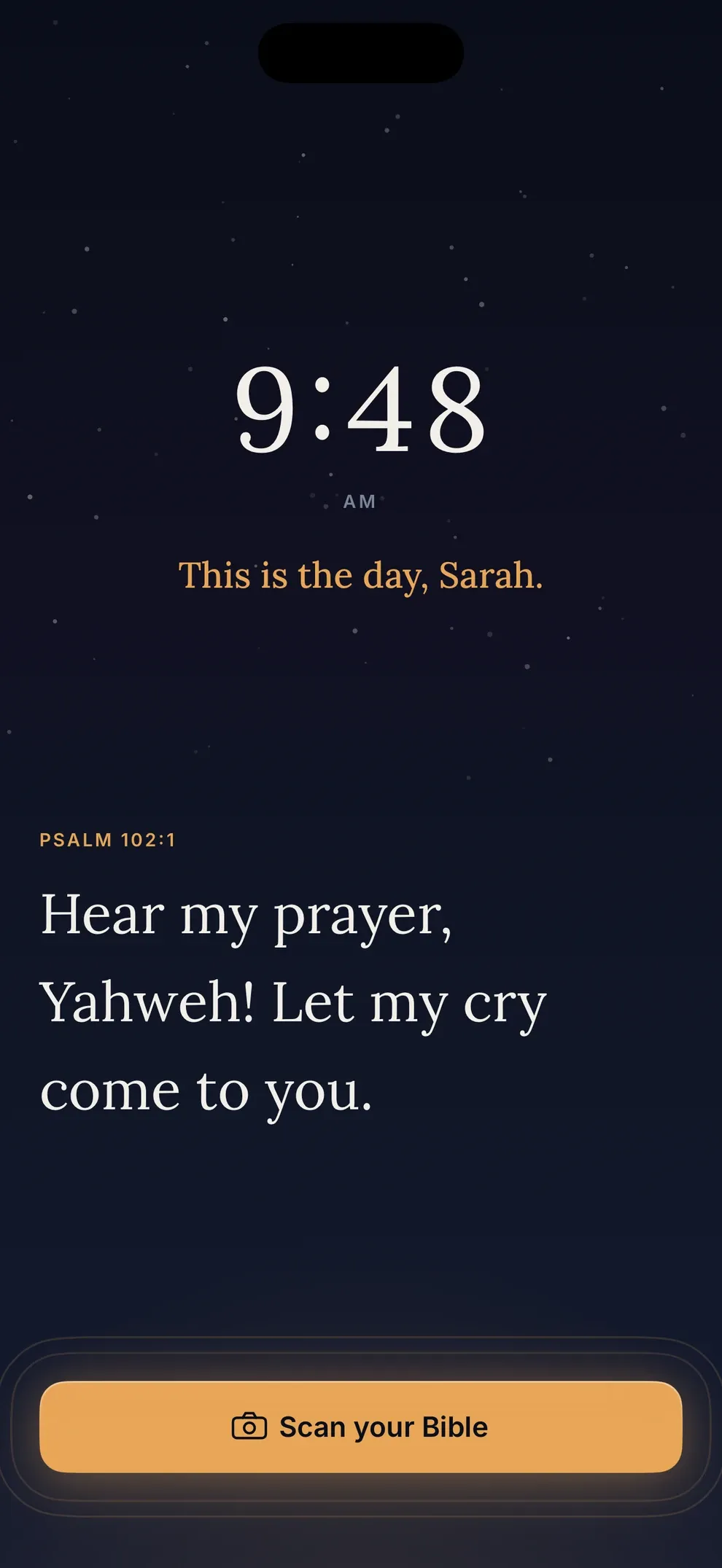
Frequently asked questions
What should I choose for a Bible alarm?
Choose a passage short enough to read attentively in the time you genuinely have: a Psalm, a Gospel paragraph, or the next section in a plan. Decide the reference before bed so the alarm leads to reading instead of searching.
Should a Bible alarm replace my regular alarm?
It can support your devotional routine, but keep a regular or second-device alarm when missing the wake-up would have serious consequences. Test the Scripture interaction while awake and leave enough margin for reading, prayer, and getting ready.
What if I cannot scan or speak when the alarm rings?
Choose another available interaction, such as typing or a verse game, and keep the physical Bible nearby for the reading itself. The best mode is the one that fits your room and brings you to Scripture without avoidable friction.
Sources and fact checks
- 01Mark 1:35 — Bible Gateway — Supports the biblical picture of Jesus rising early to pray in a solitary place.
- 02Psalm 5:3 — Bible Gateway — Supports bringing prayer to God in the morning and watching with expectation.
- 03Psalm 119:105 — Bible Gateway — Supports the image of God’s word as guidance for the path.
- 04Deuteronomy 6:6–7 — Bible Gateway — Supports keeping God’s words close and speaking about them through ordinary daily life.
- 05James 1:5 — Bible Gateway — Supports asking God for wisdom rather than treating morning practice as performance.
- 06Set an alarm in Clock on iPhone — Apple Support — Supports recurring days, alarm labels, sound, snooze, and volume settings for a practical backup.