Prayer
How to pray the Psalms in the morning when you do not know what to say
Quick answer
Choose one short Psalm, read it slowly before the day gets noisy, answer God with one honest sentence, and carry one line with you into the next task. A morning Psalm does not have to be long to be real.
Let the Psalm give you words before you edit yourself
Many people want prayer first thing in the morning but feel blocked by one honest problem: they are awake enough to worry, yet not awake enough to form careful words. The Psalms meet you right there. They do not begin with polished religious language. They begin with people speaking to God from real life: gratitude, fear, waiting, grief, trust, confusion, and hope. Psalm 5:3 shows a person bringing requests to God in the morning and waiting expectantly. Psalm 143:8 asks God to let the morning bring word of unfailing love and to show the way forward. That is why the Psalms are such a practical place to begin. They give structure when your thoughts feel scattered, but they still leave room for your actual life. Instead of asking, What impressive thing should I pray today, you can ask, Which line tells the truth about what I need from God this morning?
This matters because early prayer is often lost not through unbelief but through self-censorship. You think you need to feel more focused, more grateful, or more spiritual before you begin, so you delay the beginning itself. A Psalm breaks that pattern. You borrow the language first, then you respond in your own words second. If a line names trust, you can admit that trust feels thin. If a line asks for guidance, you can name the decision in front of you. If a line speaks about mercy in the morning, you can tell God that you need mercy because yesterday was heavy and today already feels fast. The Psalm keeps you from staring at a blank wall, and it keeps prayer from collapsing into vague good intentions.
Choose one short passage and stay with it long enough to hear it
A helpful morning Psalm practice is smaller than most people expect. You do not need to open a long plan, compare translations, and solve every question before breakfast. Start with one short passage for several mornings in a row. Psalm 5:3 is enough. Psalm 143:8 is enough. Read the same line for three to seven days if needed. Repetition is not failure. Repetition is often what allows Scripture to move from being merely visible to being memorable. On Monday you may only notice the word morning. On Tuesday you may notice waiting expectantly. By Thursday you may realize that the line is exposing how quickly you reach for urgency instead of trust. Staying with one short Psalm gives your attention somewhere to land before the rest of the day starts making claims on it.
Keep the setup realistic. The CDC explains that sleep is part of health and well-being, so do not create a devotional plan by simply cutting away needed rest. If waking thirty minutes earlier makes you resentful, exhausted, or unreliable, make the practice shorter instead of making yourself harsher. Put the Bible where you will actually see it. Decide the passage the night before. If mornings are chaotic, start with one verse rather than a whole chapter. The point is not to win a private endurance contest. The point is to meet God truthfully in the part of the day you can actually offer. A small practice you keep is more honest than a dramatic practice you abandon by Wednesday.
Turn the Psalm into prayer in three simple movements
Once you have read the Psalm, move through three simple actions. First, notice God. What does the line show you about his character, attention, mercy, faithfulness, or guidance? Second, tell the truth. Say what in your own life connects to that line right now: fear about a conversation, heaviness about parenting, anxiety before work, numbness after a hard week, gratitude for a new beginning. Third, ask for the next faithful step rather than a whole imaginary future. Psalm prayer becomes practical when it moves from text to truth to request. You are not trying to produce an emotional experience on demand. You are allowing Scripture to direct your attention and your response.
This is one reason Mark 1:35 matters. Jesus rose early, went to a solitary place, and prayed before the demands around him became louder. The point is not to copy the exact hour or turn dawn into a moral badge. The point is to notice the order of attention. Prayer came before reaction. For many people, the modern version of reaction begins with notifications, headlines, and unfinished tasks waiting on a screen. A morning Psalm interrupts that drift. Even a brief prayer such as, Lord, hear my voice and show me the way I should go, can re-order the first minute of the day. Then the prayer becomes more concrete: help me apologize well, stay patient in traffic, tell the truth in this meeting, finish my work without bitterness, or receive this day without panic.
Carry one line into the day instead of leaving prayer in the chair
A Psalm has done real work in you when one line follows you past the moment of reading. You do not need to remember the whole passage. Carry one phrase. It may be wait expectantly. It may be in you I trust. It may be show me the way I should go. Repeat it while making coffee, walking to the car, opening a school bag, or standing before the first hard task. This keeps morning prayer from becoming a sealed religious moment that ends as soon as the Bible closes. The Psalm becomes a thread you can pick up again at noon, at the red light, or outside a meeting room. Over time, that repeated return is often more formative than one intense emotional morning.
If a cue helps you begin, use one. Koum is built around that transition: the app can ask you to open, scan, say, or type a Bible verse before the alarm ends, and then it leaves room for prayer, a short devotional, and a private reflection without timing those later steps. But even a useful app should remain a servant, not a scorecard. The practice is not holy because it is tracked. It is helpful when it gives your first attention to God and keeps you honest about what this day requires. If you miss a morning, return the next day without drama. If one Psalm feels especially true in your season, stay with it longer. Morning prayer with the Psalms is not about saying more. It is about beginning with words sturdy enough to carry you into real life.
Put this into practice with Koum.
Koum asks you to open, scan, speak, or type a Bible verse before the alarm ends. Then it gives the morning room for prayer, a devotional, and a private reflection.
Get Koum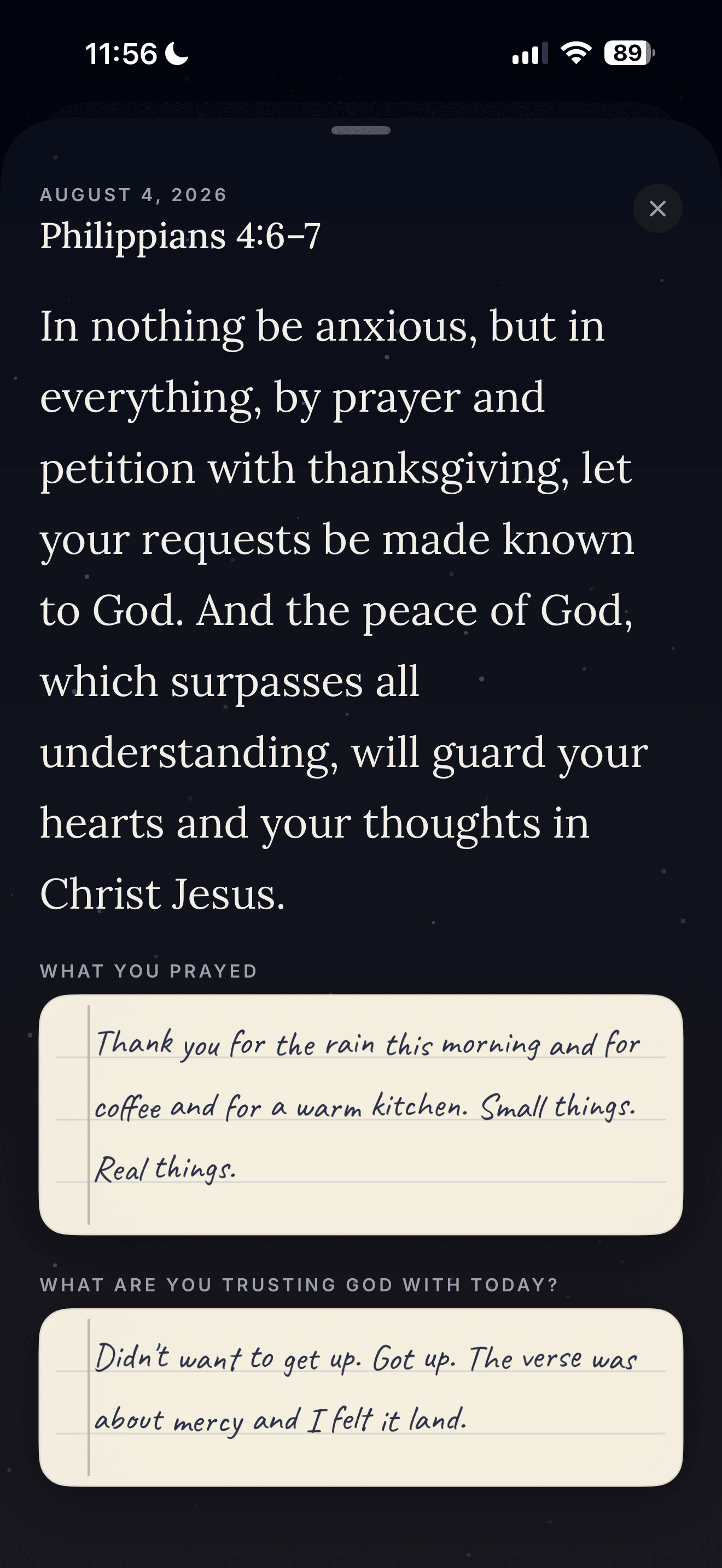
Frequently asked questions
What if I read a Psalm and still feel distracted?
That does not mean the prayer failed. Read one line again, name the distraction honestly, and turn that exact concern into your prayer. The goal is not a perfectly calm mind. The goal is bringing your real mind to God.
Do I need a long quiet time for this to count?
No. A short, consistent practice can still be faithful. If you have two quiet minutes, you can read one Psalm verse, answer God in one sentence, and carry that line into your day.
Sources and fact checks
- 01Psalm 5:3, NIV — Morning prayer language: bringing requests to God and waiting expectantly.
- 02Psalm 143:8, NIV — Morning trust, guidance, and asking God for the next faithful step.
- 03Mark 1:35, NIV — Jesus praying early and alone before the demands of the day.
- 04CDC: About Sleep — Sleep matters for health and well-being; a devotional routine should not be built by neglecting rest.
- 05Koum support — Verified product claims about alarms, scan verification, and untimed prayer, devotional, and journal steps.