Prayer
Psalm 37: Delight Thyself Also in the LORD
Quick answer
Psalm 37 is a wisdom psalm of David that tells God's people not to fret when wrongdoers seem to prosper. Instead it calls them to trust in the LORD, delight in Him, commit their way to Him, and rest and wait patiently. Its middle verses (3–7) make a simple morning prayer of surrender.
Some psalms cry out in the middle of trouble. Psalm 37 speaks to a quieter, longer ache: the sense that people who do wrong seem to get ahead, while those who try to live faithfully wait. Its first words are a gentle command: "Fret not thyself because of evildoers." Then, instead of leaving you with a warning, the psalm gives you something to do: trust, delight, commit your way and rest in the LORD.
The heading in the King James Version is simple: "A Psalm of David." In Hebrew the psalm is written as an acrostic, with its stanzas following the letters of the alphabet, a carefully made shape that suits teaching meant to be remembered. From that careful frame comes a morning-shaped center: verses 3 to 7, which can be prayed almost as they stand before the day begins.
Below you will find the full KJV text, a section-by-section reading, and a simple way to pray Psalm 37 as you start your day.
Psalm 37 (KJV) full text
A Psalm of David.
1 Fret not thyself because of evildoers, neither be thou envious against the workers of iniquity.
2 For they shall soon be cut down like the grass, and wither as the green herb.
3 Trust in the LORD, and do good; so shalt thou dwell in the land, and verily thou shalt be fed.
4 Delight thyself also in the LORD: and he shall give thee the desires of thine heart.
5 Commit thy way unto the LORD; trust also in him; and he shall bring it to pass.
6 And he shall bring forth thy righteousness as the light, and thy judgment as the noonday.
7 Rest in the LORD, and wait patiently for him: fret not thyself because of him who prospereth in his way, because of the man who bringeth wicked devices to pass.
8 Cease from anger, and forsake wrath: fret not thyself in any wise to do evil.
9 For evildoers shall be cut off: but those that wait upon the LORD, they shall inherit the earth.
10 For yet a little while, and the wicked shall not be: yea, thou shalt diligently consider his place, and it shall not be.
11 But the meek shall inherit the earth; and shall delight themselves in the abundance of peace.
12 The wicked plotteth against the just, and gnasheth upon him with his teeth.
13 The LORD shall laugh at him: for he seeth that his day is coming.
14 The wicked have drawn out the sword, and have bent their bow, to cast down the poor and needy, and to slay such as be of upright conversation.
15 Their sword shall enter into their own heart, and their bows shall be broken.
16 A little that a righteous man hath is better than the riches of many wicked.
17 For the arms of the wicked shall be broken: but the LORD upholdeth the righteous.
18 The LORD knoweth the days of the upright: and their inheritance shall be for ever.
19 They shall not be ashamed in the evil time: and in the days of famine they shall be satisfied.
20 But the wicked shall perish, and the enemies of the LORD shall be as the fat of lambs: they shall consume; into smoke shall they consume away.
21 The wicked borroweth, and payeth not again: but the righteous sheweth mercy, and giveth.
22 For such as be blessed of him shall inherit the earth; and they that be cursed of him shall be cut off.
23 The steps of a good man are ordered by the LORD: and he delighteth in his way.
24 Though he fall, he shall not be utterly cast down: for the LORD upholdeth him with his hand.
25 I have been young, and now am old; yet have I not seen the righteous forsaken, nor his seed begging bread.
26 He is ever merciful, and lendeth; and his seed is blessed.
27 Depart from evil, and do good; and dwell for evermore.
28 For the LORD loveth judgment, and forsaketh not his saints; they are preserved for ever: but the seed of the wicked shall be cut off.
29 The righteous shall inherit the land, and dwell therein for ever.
30 The mouth of the righteous speaketh wisdom, and his tongue talketh of judgment.
31 The law of his God is in his heart; none of his steps shall slide.
32 The wicked watcheth the righteous, and seeketh to slay him.
33 The LORD will not leave him in his hand, nor condemn him when he is judged.
34 Wait on the LORD, and keep his way, and he shall exalt thee to inherit the land: when the wicked are cut off, thou shalt see it.
35 I have seen the wicked in great power, and spreading himself like a green bay tree.
36 Yet he passed away, and, lo, he was not: yea, I sought him, but he could not be found.
37 Mark the perfect man, and behold the upright: for the end of that man is peace.
38 But the transgressors shall be destroyed together: the end of the wicked shall be cut off.
39 But the salvation of the righteous is of the LORD: he is their strength in the time of trouble.
40 And the LORD shall help them, and deliver them: he shall deliver them from the wicked, and save them, because they trust in him.
What Psalm 37 means, section by section
Verses 1–2: don't fret. The psalm opens by naming a familiar feeling: unease, even envy, when people who do harm seem to flourish. "Fret" here is more than a passing worry. It is the agitation that can take over your thoughts. The answer is not to pretend injustice isn't real. It is to remember that this success is brief: "they shall soon be cut down like the grass." The psalm asks you to loosen your grip on that comparison before it hardens into bitterness.
Verses 3–8: trust, delight, commit, rest. This is the heart of the psalm, and it reads like a sequence for the morning. "Trust in the LORD, and do good." Faith is not only inward; it keeps doing good in the place where you live. "Delight thyself also in the LORD: and he shall give thee the desires of thine heart." That second half is not a promise that God will hand you whatever you happen to want. The desire grows out of the delight: as you take pleasure in God, your wants are reshaped toward what he loves. Then comes "Commit thy way unto the LORD," handing him the path of the day, and "Rest in the LORD, and wait patiently for him." Verse 8 closes the cluster: "Cease from anger, and forsake wrath." The psalm knows how easily fretting turns into a heat that does harm.
Verses 9–22: the meek shall inherit. Those who wait on the LORD "shall inherit the earth," and verse 11 says, "the meek shall inherit the earth; and shall delight themselves in the abundance of peace." Jesus echoes that line in the Beatitudes: "Blessed are the meek: for they shall inherit the earth" (Matthew 5:5). Around it, the psalm is honest about a hard world. The wicked plot, draw swords and seem strong, yet their own violence turns back on them. A little that a righteous person has is better than the riches of many who do wrong. This is not a timetable you can mark on a calendar. It is a way of seeing: the present is not the whole story, and peace is the inheritance God has in mind.
Verses 23–31: steps ordered, and a careful witness. "The steps of a good man are ordered by the LORD." That does not mean every day will feel smooth. Verse 24 allows for falling: "Though he fall, he shall not be utterly cast down: for the LORD upholdeth him with his hand." Verse 25 is David's own testimony from a long life: "I have been young, and now am old; yet have I not seen the righteous forsaken, nor his seed begging bread." This is a grateful observation, not a promise that faithful people will never suffer or go hungry. The rest of the psalm already admits real trouble. The deeper claim is that God does not abandon those who belong to him, even when the path is hard. The section ends with a quiet picture of a life shaped from the inside: the law of God in the heart, and steps that hold.
Verses 32–40: wait, and find strength. The last movement returns to waiting. The wicked may watch and even seek to harm, but "the LORD will not leave him in his hand." Verse 34 says, "Wait on the LORD, and keep his way." The psalmist has seen the powerful look immovable, "like a green bay tree," and then be gone. The end of the upright is peace. The closing promise is not that trouble will never come, but that God is "their strength in the time of trouble," and that he saves those who trust in him.
Why Psalm 37 fits the morning
Verses 3 to 7 give you a way to begin before the day's comparisons and frustrations have a chance to speak. Trust, delight, commit your way, rest and wait: each is a posture you can take while the house is still quiet. "Commit thy way unto the LORD" is especially fitted to the first hour, when the path of the day is still unwalked.
If you are new to praying Scripture in the morning, our guide on how to pray the Psalms in the morning offers a simple routine, and our collection of morning prayers gives short words for busy days. You can also meditate on Scripture in the morning by staying with a single line, such as verse 4 or verse 7. A prayer journal can hold the way you choose to commit to God that day.
How to pray Psalm 37
Five quiet minutes are enough to begin.
- Read verses 3 to 7 slowly, out loud if you can. Let the four verbs settle: trust, delight, commit, rest.
- Name one comparison or frustration you are carrying, and practice "fret not" by handing it to God rather than turning it over in your mind.
- Delight first, then ask. Spend a moment enjoying God himself, then bring him the desires of your heart, trusting him to shape them.
- Commit your way. Name the main tasks, conversations or decisions of the day and place them in his hands.
- Wait a little. Sit quietly with verse 7 before you pick up the day's pace. You might write that verse in your prayer journal.
A short sample prayer:
"Lord, I do not want to begin this day by measuring myself against others, or by feeding anger at what seems unfair. I choose to trust you and to do good where I am. Teach me to delight in you, and to want what you want. I commit this day's path to you. Help me rest and wait, and be my strength if trouble comes. Amen."
Psalm 37 when life feels unfair or you're anxious
Some mornings the world already feels tilted. Someone else's shortcut seems to have worked. A worry sits in your chest before your feet touch the floor. Psalm 37 was written for that mood. Verse 1 tells you not to fret; verses 7 and 8 tell you not to let that fretting become wrath. The psalm does not scold you for noticing injustice. It invites you to bring the heat of it to God and to wait, with your hands still doing good.
If anxiety about the day ahead is heavy, try this morning prayer for anxiety before work. If prayer itself feels empty, our guide on how to pray when you feel spiritually dry offers small, grace-filled steps. Other psalms can sit with you too: Psalm 27 for courage when fear is close, Psalm 34 for a God who is near the brokenhearted, Psalm 23 and Psalm 121 for care and keeping, Psalm 91 for refuge, Psalm 139 for being fully known, Psalm 51 for a clean heart, and Psalm 1 for a rooted life.
Build the habit with Koum
A morning habit is easier when Scripture is the first thing you meet. Koum is a Bible verse alarm clock: you wake up to a verse and can set up a simple morning reading and prayer routine.
To begin, follow our guide to setting up a Bible alarm for morning reading. You can also read more about using a Christian alarm clock app. Then, when the alarm sounds, open Psalm 37 and let verses 3 to 7 be your first prayer: trust, delight, commit your way and rest in the LORD.
Put this into practice with Koum.
Koum asks you to open, scan, speak, or type a Bible verse before the alarm ends. Then it gives the morning room for prayer, a devotional, and a private reflection.
Get Koum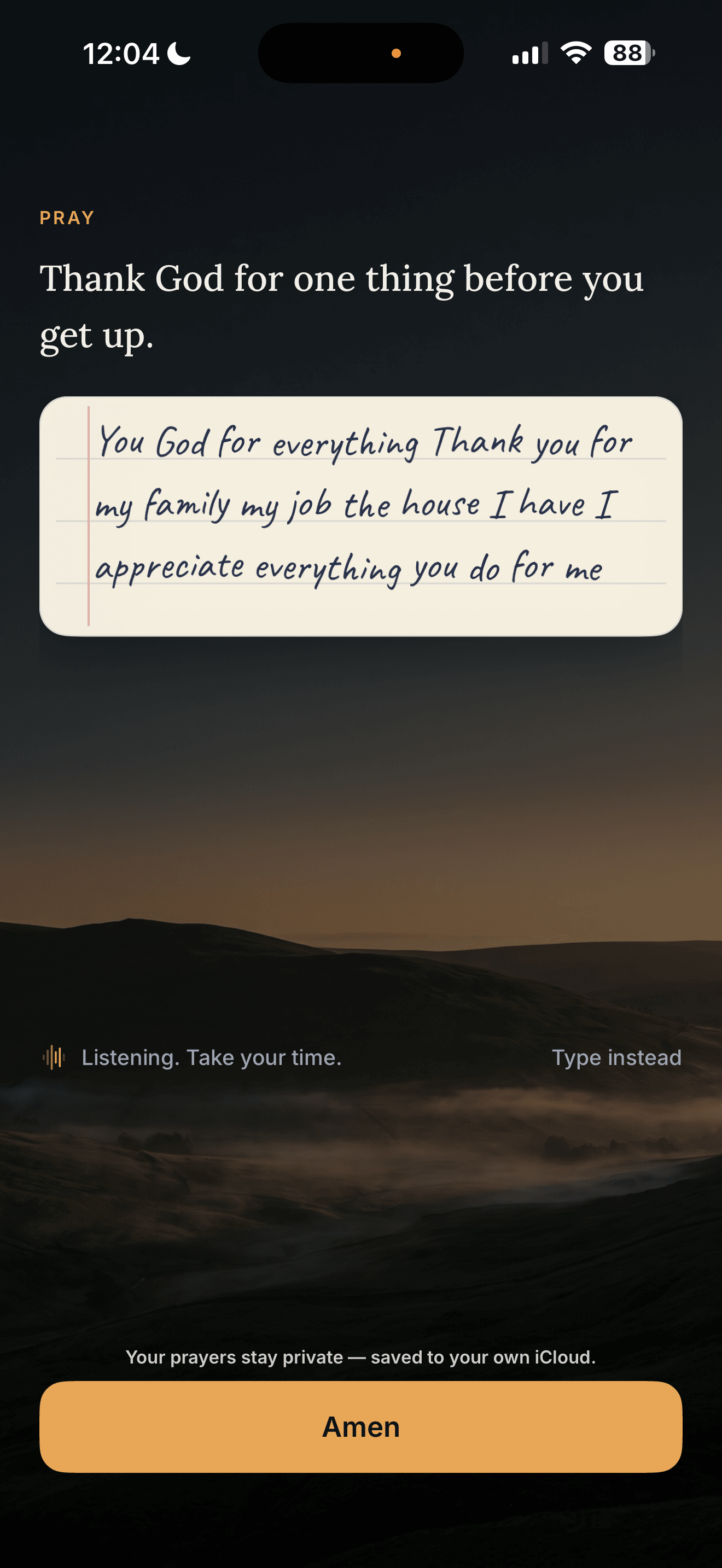
Frequently asked questions
What is Psalm 37 about?
Psalm 37 is a wisdom psalm of David that tells God's people not to fret when evildoers seem to prosper. It calls them to trust in the LORD, delight in him, commit their way to him, and wait patiently, and it promises that God is their strength in trouble.
What does "delight thyself in the LORD" mean? Does verse 4 promise anything I want?
To delight in the LORD is to take pleasure in God himself, not only in what he might give. Verse 4 is not a promise that every wish will be granted. The desires it speaks of grow out of that delight, as your heart is reshaped toward what God loves.
What does "fret not" mean?
In Psalm 37, "fret" is the restless agitation, even envy or anger, that can rise when people who do wrong seem to get ahead. "Fret not" is a call to loosen that grip, to cease from wrath, and to wait on God instead of letting comparison run the day.
How can I pray Psalm 37 in the morning?
Read verses 3 to 7, trust God with one frustration you are carrying, delight in him before you ask, commit the path of the day to him, and sit with verse 7 for a quiet moment before you begin.
Sources and fact checks
- 01Psalm 37 (KJV) — Verbatim quotation checked on Bible Gateway 2026-11-13 (40/40). Divine name rendered LORD (KJV small-caps / YHWH). KJV public domain in the U.S. v.4 uses Bible Gateway's colon.
- 02Psalm 37 (KJV) on King James Bible Online — Confirms superscription "A Psalm of David." and LORD rendering. Checked 2026-11-13.
- 03Koum on the App Store — Supports Koum feature statements.