Prayer
Psalm 103: Bless the LORD, O My Soul
Quick answer
Psalm 103 is a psalm of David that calls his own soul to bless the LORD and remember all his benefits: forgiveness, healing, redemption, mercy and renewed strength. It describes God as merciful and slow to anger, says he removes our sins "as far as the east is from the west," and ends with all creation blessing him. It makes a natural first prayer of thanks in the morning.
Most mornings start with a list. Before you are fully awake, your mind is already running through what needs to be done, what went wrong yesterday and what might go wrong today. Psalm 103 starts somewhere else. It opens with a person talking to their own soul: "Bless the LORD, O my soul: and all that is within me, bless his holy name."
Then it adds a reminder that fits the first minutes of the day: "forget not all his benefits." Before the to-do list, Psalm 103 invites you to remember what God has already done. This guide gives you the full King James text, walks through what each section means, and shows a simple way to pray Psalm 103 when you wake up.
Psalm 103 (KJV) full text
A Psalm of David.
1 Bless the LORD, O my soul: and all that is within me, bless his holy name.
2 Bless the LORD, O my soul, and forget not all his benefits:
3 Who forgiveth all thine iniquities; who healeth all thy diseases;
4 Who redeemeth thy life from destruction; who crowneth thee with lovingkindness and tender mercies;
5 Who satisfieth thy mouth with good things; so that thy youth is renewed like the eagle's.
6 The LORD executeth righteousness and judgment for all that are oppressed.
7 He made known his ways unto Moses, his acts unto the children of Israel.
8 The LORD is merciful and gracious, slow to anger, and plenteous in mercy.
9 He will not always chide: neither will he keep his anger for ever.
10 He hath not dealt with us after our sins; nor rewarded us according to our iniquities.
11 For as the heaven is high above the earth, so great is his mercy toward them that fear him.
12 As far as the east is from the west, so far hath he removed our transgressions from us.
13 Like as a father pitieth his children, so the LORD pitieth them that fear him.
14 For he knoweth our frame; he remembereth that we are dust.
15 As for man, his days are as grass: as a flower of the field, so he flourisheth.
16 For the wind passeth over it, and it is gone; and the place thereof shall know it no more.
17 But the mercy of the LORD is from everlasting to everlasting upon them that fear him, and his righteousness unto children's children;
18 To such as keep his covenant, and to those that remember his commandments to do them.
19 The LORD hath prepared his throne in the heavens; and his kingdom ruleth over all.
20 Bless the LORD, ye his angels, that excel in strength, that do his commandments, hearkening unto the voice of his word.
21 Bless ye the LORD, all ye his hosts; ye ministers of his, that do his pleasure.
22 Bless the LORD, all his works in all places of his dominion: bless the LORD, O my soul.
What Psalm 103 means, section by section
The heading in the King James Version simply reads "A Psalm of David." The psalm has no request in it. From start to finish, it is praise and thanks.
Verses 1–5: speaking to your own soul. The psalm begins with self-talk. The writer tells his own soul to bless the LORD, with "all that is within me." Then he gives the reason, in a list of benefits: God forgives "all thine iniquities," heals, redeems "thy life from destruction," crowns you "with lovingkindness and tender mercies," and satisfies "thy mouth with good things." The picture at the end of verse 5, "thy youth is renewed like the eagle's," is about strength that God gives back to those who are worn out. The word "forget" matters here. Gratitude is often a choice to remember on purpose.
Verses 6–14: who God is. The psalm moves from personal benefits to God's character. He does what is right for "all that are oppressed." He made his ways known to Moses and to Israel. Verse 8 gives a summary worth memorizing: "The LORD is merciful and gracious, slow to anger, and plenteous in mercy." God does not hold anger "for ever," and he has not treated us as our sins deserve. Then come two of the best-loved pictures in the Psalms. His mercy is as high as the heaven above the earth, and "As far as the east is from the west, so far hath he removed our transgressions from us." Verse 13 compares God to a father who "pitieth his children," and verse 14 explains why: "he knoweth our frame; he remembereth that we are dust." God is not surprised by your limits.
Verses 15–18: short lives and lasting mercy. Human life is compared to grass and to a wildflower. It flourishes for a while, then the wind passes over it "and it is gone." But the psalm sets it against something that doesn't fade: "the mercy of the LORD is from everlasting to everlasting upon them that fear him," reaching even to "children's children." Our days are short. His mercy is not.
Verses 19–22: everything blesses the LORD. The psalm ends by widening the circle. God's throne is in the heavens, and "his kingdom ruleth over all." Angels, all his hosts and "all his works in all places of his dominion" are called to bless him. Then the last line comes back to where it started: "bless the LORD, O my soul." The psalm begins with one person's praise, joins the praise of all creation, and returns home.
If you are reading through the Psalms, Psalm 103 pairs well with Psalm 34, another psalm of praise and thanks, and with Psalm 23, which also describes God's care in personal terms. For more on God as a refuge in hard seasons, read Psalm 46 and Psalm 91. Psalm 139 echoes the idea that God knows us completely.
Why Psalm 103 fits the start of the day
The first words of the day often set its tone. Psalm 103 puts gratitude before the to-do list. Instead of starting with what you lack, you start by naming what God has given. "Forget not all his benefits" is a simple instruction for a waking mind: remember first, then plan.
It also fits the honest way many mornings feel. Verse 14 reminds you that God knows you are dust, so you don't have to pretend to be stronger than you are. And verse 5's picture of renewed strength is a hopeful word for the start of a long day. Like Psalm 5, which brings prayer to God in the morning, and Psalm 121, which looks to God for help, Psalm 103 is a good psalm to keep near your bedside.
If you'd like to make this a regular rhythm, read our guide on how to pray the Psalms in the morning and our simple approach to morning prayer. You can also meditate on Scripture in the morning by choosing one line from Psalm 103 to carry through your day.
How to pray Psalm 103 when you wake up
You don't need much time. Try these steps before you reach for your phone:
- Speak to your soul, from verses 1–2. Say slowly, "Bless the LORD, O my soul," and ask God to help you begin the day with thanks.
- Name your benefits, from verses 3–5. Thank God for forgiveness, for care, for good things and for strength. Name one specific gift from the past day.
- Remember his character, from verse 8. Repeat "The LORD is merciful and gracious, slow to anger, and plenteous in mercy" as you think about the people you'll see today.
- Let go of yesterday's guilt, from verse 12. Picture the distance between east and west, and thank God that your forgiven sins are not waiting for you this morning.
- Join the bigger song, from verse 22. End by blessing the LORD along with "all his works," then step into your day.
You can write the benefit you named in a prayer journal. Over weeks, the list becomes a record of God's faithfulness.
Here is a short sample prayer you can use:
"Lord, with all that is within me, I bless your holy name. Thank you for forgiving me, for caring for me and for giving me strength for today. You know my frame, and you are merciful and gracious. Help me remember your benefits in every hour of this day. Amen."
Psalm 103 when you feel guilty or worn out
Some mornings start with the weight of yesterday: a harsh word, a mistake, a habit you keep returning to. Psalm 103 speaks directly to that. God "hath not dealt with us after our sins," and he has removed our transgressions as far as the east is from the west. Forgiveness is not a reluctant gift in this psalm. It comes from a God who is "plenteous in mercy."
Other mornings start with plain tiredness. Verse 14 is a gentle word for those days: God remembers that we are dust. He doesn't expect you to be more than human. You can come to him tired and still be welcome.
The psalm's list of benefits includes healing, but it is a song of praise, not a promise about any particular illness or outcome. The focus is on who God is and on his steady mercy toward people who trust him.
If guilt is heavy, Psalm 51 gives you words to confess and ask for a clean heart, and Psalm 103 then gives you words to give thanks for forgiveness. For a steady foundation, Psalm 1 describes the rooted life that delights in God's word. Grace meets you in both places.
Build the habit with Koum
A morning habit is easier when Scripture is the first thing you meet. Koum is a Bible verse alarm clock: you wake up to a verse and can set up a simple morning reading and prayer routine.
To begin, follow our guide to setting up a Bible alarm for morning reading. You can also read more about using a Christian alarm clock app. Then, when the alarm sounds, open Psalm 103 and let verse 2 be your first prayer: bless the LORD, and forget not all his benefits.
Put this into practice with Koum.
Koum asks you to open, scan, speak, or type a Bible verse before the alarm ends. Then it gives the morning room for prayer, a devotional, and a private reflection.
Get Koum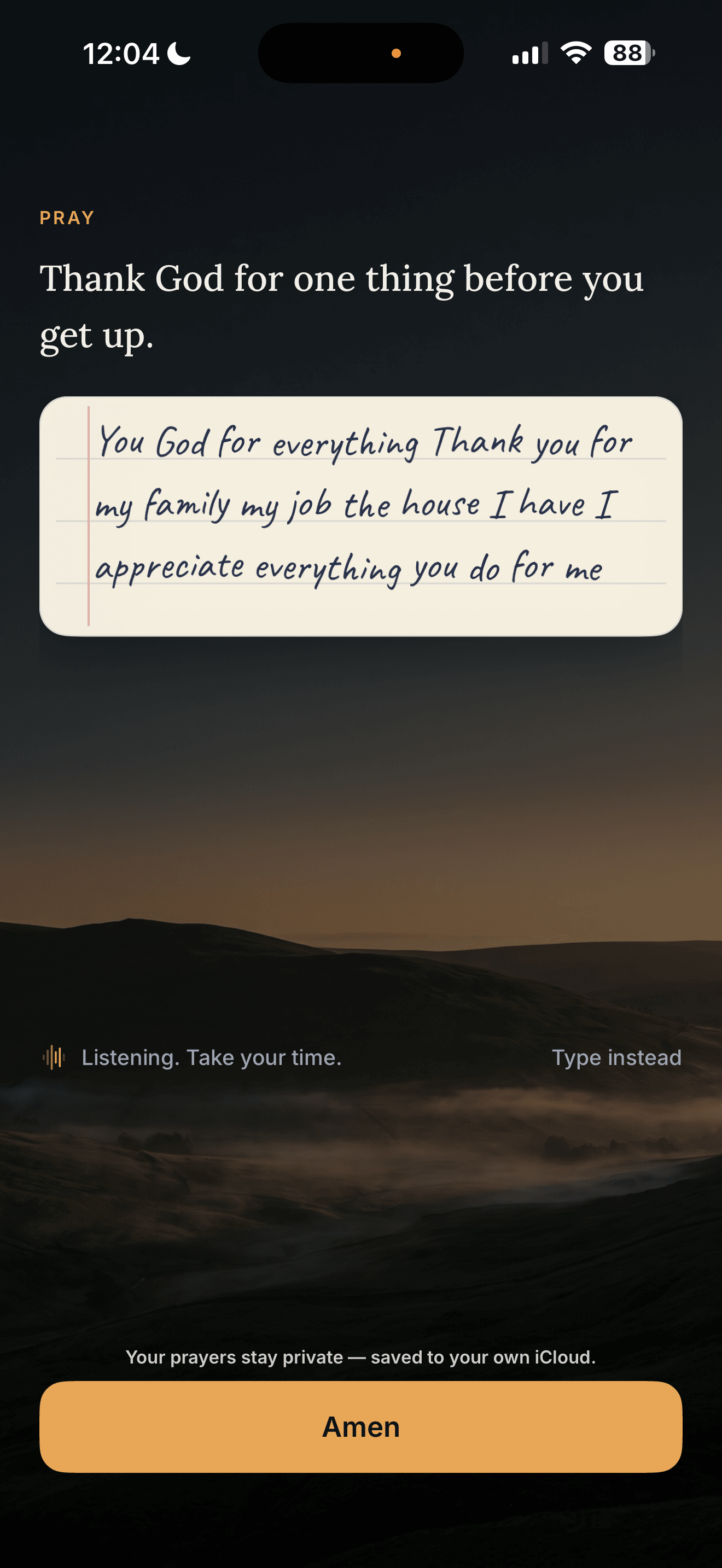
Frequently asked questions
What is Psalm 103 about?
Psalm 103 is a psalm of David that praises God for his benefits and his character. It lists forgiveness, healing, redemption, lovingkindness and renewed strength, describes God as merciful, gracious and slow to anger, and ends with all creation called to bless the LORD.
What does "Bless the LORD, O my soul" mean?
It is the writer speaking to himself, calling his whole inner life to praise God. To "bless" the LORD here means to praise and thank him. It is a way of directing your own heart toward gratitude.
What are the benefits listed in Psalm 103?
Verses 3–5 list them: God forgives all your iniquities, heals all your diseases, redeems your life from destruction, crowns you with lovingkindness and tender mercies, and satisfies your mouth with good things so your youth is renewed like the eagle's.
How can I pray Psalm 103 every morning?
Start with verses 1–2 and bless the LORD, name one benefit from verses 3–5, repeat verse 8 about God's mercy, thank him from verse 12 that your sins are removed, and close with verse 22. A Bible verse alarm can help you remember.
Sources and fact checks
- 01Psalm 103 (KJV) — Verbatim quotation checked on Bible Gateway, King James Bible Online and Bible Hub 2026-11-23 (22/22). Superscription "A Psalm of David." from KJBO/Bible Hub (Bible Gateway does not display it). Divine name rendered LORD. KJV public domain in the U.S.
- 02Psalms Chapter 103, King James Bible Online — 22/22 verse match and superscription, checked 2026-11-23.