Prayer
Psalm 145: Every Day Will I Bless Thee
Quick answer
Psalm 145 is David's psalm of praise. It promises to bless God every day, celebrates his greatness and his works from one generation to the next, and describes him as gracious, full of compassion, slow to anger and good to all. It ends by saying the LORD is near to everyone who calls on him in truth. Its "every day" line makes it a natural morning prayer.
Some habits only stick when they start small. A glass of water first thing, a few minutes of quiet, a single line of Scripture before the phone comes out. Psalm 145 builds a habit into its very first verses. In verse 2 the writer says, "Every day will I bless thee; and I will praise thy name for ever and ever." Not once in a while, not when life is easy, but every day.
The rest of the psalm gives plenty of reasons. God is great, gracious and good to all. His kingdom lasts, he lifts up the fallen and he is near to everyone who calls on him. This guide gives you the full King James text, walks through what each section means, and shows a simple way to pray Psalm 145 when you wake up.
Psalm 145 (KJV) full text
David's Psalm of praise.
1 I will extol thee, my God, O king; and I will bless thy name for ever and ever.
2 Every day will I bless thee; and I will praise thy name for ever and ever.
3 Great is the LORD, and greatly to be praised; and his greatness is unsearchable.
4 One generation shall praise thy works to another, and shall declare thy mighty acts.
5 I will speak of the glorious honour of thy majesty, and of thy wondrous works.
6 And men shall speak of the might of thy terrible acts: and I will declare thy greatness.
7 They shall abundantly utter the memory of thy great goodness, and shall sing of thy righteousness.
8 The LORD is gracious, and full of compassion; slow to anger, and of great mercy.
9 The LORD is good to all: and his tender mercies are over all his works.
10 All thy works shall praise thee, O LORD; and thy saints shall bless thee.
11 They shall speak of the glory of thy kingdom, and talk of thy power;
12 To make known to the sons of men his mighty acts, and the glorious majesty of his kingdom.
13 Thy kingdom is an everlasting kingdom, and thy dominion endureth throughout all generations.
14 The LORD upholdeth all that fall, and raiseth up all those that be bowed down.
15 The eyes of all wait upon thee; and thou givest them their meat in due season.
16 Thou openest thine hand, and satisfiest the desire of every living thing.
17 The LORD is righteous in all his ways, and holy in all his works.
18 The LORD is nigh unto all them that call upon him, to all that call upon him in truth.
19 He will fulfil the desire of them that fear him: he also will hear their cry, and will save them.
20 The LORD preserveth all them that love him: but all the wicked will he destroy.
21 My mouth shall speak the praise of the LORD: and let all flesh bless his holy name for ever and ever.
What Psalm 145 means, section by section
The heading reads "David's Psalm of praise," so the psalm is attributed to David. The Berean Standard Bible adds a note that this psalm is an acrostic poem, with each verse beginning with the successive letters of the Hebrew alphabet. That shape gives the psalm a sense of completeness, as if praise is being offered from A to Z.
Verses 1–3: a promise to praise every day. The psalm opens with a personal promise. "I will extol thee, my God, O king," the writer says, and then he commits to blessing God's name "for ever and ever." Verse 2 narrows that big promise down to something doable: "Every day." Verse 3 gives the reason, "Great is the LORD, and greatly to be praised; and his greatness is unsearchable." The word "unsearchable" means praise never runs out of material, because there is always more of God to wonder at.
Verses 4–7: one generation telling the next. Praise doesn't stay private. "One generation shall praise thy works to another, and shall declare thy mighty acts." Faith is passed along by telling what God has done. Verses 5–7 describe how: speaking of his "glorious honour," his "wondrous works" and his "great goodness," and singing of his righteousness. You don't have to be a preacher. A parent, a friend or a neighbor can share what God has done in their life.
Verses 8–9: who God is. Here is the heart of the psalm: "The LORD is gracious, and full of compassion; slow to anger, and of great mercy." Verse 9 widens the circle: "The LORD is good to all: and his tender mercies are over all his works." God's character is steady. He is not quick to anger, and his goodness isn't limited to a few people.
Verses 10–13: an everlasting kingdom. All God's works praise him, and his people bless him by speaking of "the glory of thy kingdom" and making his "mighty acts" known. Verse 13 gives the anchor of the section: "Thy kingdom is an everlasting kingdom, and thy dominion endureth throughout all generations." Rulers and seasons change. His kingdom doesn't.
Verses 14–16: he lifts up and cares. "The LORD upholdeth all that fall, and raiseth up all those that be bowed down." This is one of the most comforting lines in the psalm. God notices people who have stumbled or are weighed down. Verses 15 and 16 describe how all living things look to him: "The eyes of all wait upon thee," and "Thou openest thine hand, and satisfiest the desire of every living thing." Read in context, these lines praise God as the generous giver of life. They are not a promise of any particular provision for any particular person.
Verses 17–21: near to all who call. The psalm closes with God's nearness. "The LORD is righteous in all his ways, and holy in all his works." Then verse 18: "The LORD is nigh unto all them that call upon him, to all that call upon him in truth." The words "in truth" suggest honest prayer, with no performance. Verse 19 says he will "hear their cry," and verse 20 says he preserves those who love him. The last verse returns to where the psalm started, with a person's mouth speaking praise, and expands it: "let all flesh bless his holy name for ever and ever."
If you want another psalm of praise, try Psalm 103, which also calls the soul to remember God's goodness. Psalm 34 is another song of thanks, and Psalm 23 pictures God's care in personal terms.
Why Psalm 145 fits the start of the day
Most of us start the day by thinking about what we have to do. Psalm 145 starts with praise instead. "Every day will I bless thee" turns praise into a daily rhythm, and mornings are the easiest place to anchor a rhythm because nothing else has had a chance to crowd it out.
There's a practical point here too. A habit survives when it's small enough to repeat. You don't need a long prayer. You need one honest sentence of praise before the to-do list. Verse 2 gives you the sentence. For more ideas, read our guide to how to pray the Psalms in the morning and our simple approach to morning prayer. You can also memorize a Bible verse in the morning by choosing one line from Psalm 145 and repeating it through the day, or build it into a wider Christian morning routine of prayer.
How to pray Psalm 145 when you wake up
You don't need much time. Try these steps before you reach for your phone:
- Start with verse 2. Say, "Every day will I bless thee," and tell God one thing you are grateful for this morning.
- Remember his character, from verse 8. Repeat "The LORD is gracious, and full of compassion; slow to anger, and of great mercy" as you think about the day ahead.
- Bring what's heavy, from verse 14. Name one worry or burden and thank God that he "upholdeth all that fall."
- Call on him in truth, from verse 18. Tell God honestly how the morning feels, without polishing it.
- Close with verse 21. Let your mouth speak his praise, even in a few words, and step into the day.
Here is a short sample prayer you can use:
"Lord, every day I want to bless you, and today is no different. Thank you that you are gracious, full of compassion and slow to anger. You lift up those who are bowed down, and I bring you what weighs on me this morning. You are near to everyone who calls on you in truth, so I call on you now. Be with me today. Amen."
Psalm 145 when you feel weighed down
Praise can feel hard when you're tired, discouraged or carrying something heavy. The good news is that Psalm 145 doesn't ask you to fake it. Verse 14 says "The LORD upholdeth all that fall, and raiseth up all those that be bowed down." The psalm assumes some people will be bowed down, and it says God sees them.
Verse 18 is just as gentle. God is "nigh unto all them that call upon him," and the phrase "in truth" means you can come as you are. A short, honest prayer is still a prayer. If your praise starts small, such as one line of thanks, that's enough for today.
For more of the same theme, read Psalm 46, which describes God as a refuge and a very present help in trouble, and Psalm 121, which looks to God for help. If you carry guilt, Psalm 51 gives you words to bring it to God. Grace meets you in each of them.
Build the habit with Koum
A morning habit is easier when Scripture is the first thing you meet. Koum is a Bible verse alarm clock: you wake up to a verse and can set up a simple morning reading and prayer routine.
To begin, follow our guide to setting up a Bible alarm for morning reading. You can also read more about using a Christian alarm clock app. Then, when the alarm sounds, open Psalm 145 and let verse 2 be your first prayer: every day, bless him.
Put this into practice with Koum.
Koum asks you to open, scan, speak, or type a Bible verse before the alarm ends. Then it gives the morning room for prayer, a devotional, and a private reflection.
Get Koum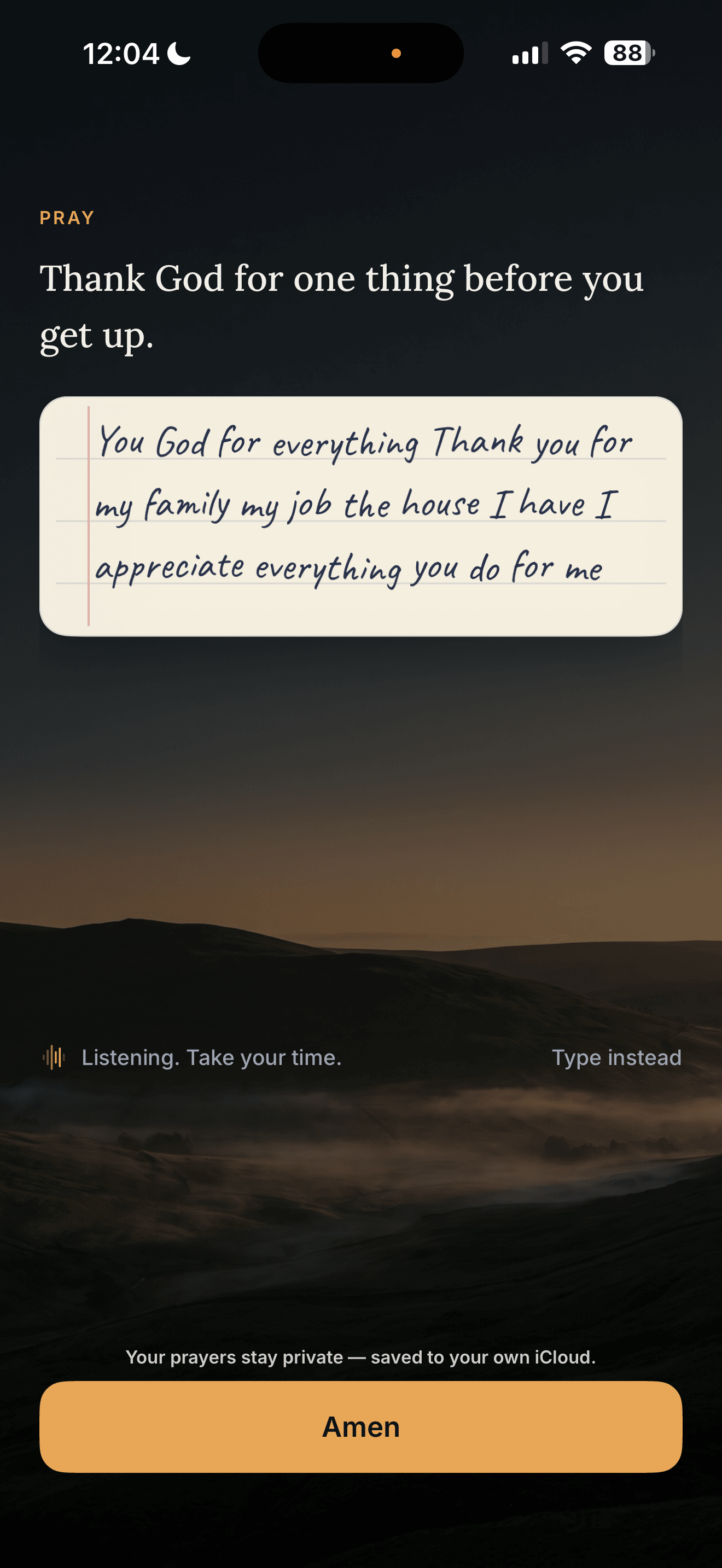
Frequently asked questions
What is Psalm 145 about?
Psalm 145 is David's psalm of praise. It promises to bless God every day, celebrates his greatness and his works from generation to generation, describes him as gracious, full of compassion, slow to anger and good to all, and ends by saying the LORD is near to everyone who calls on him in truth.
What does "Every day will I bless thee" mean?
In verse 2, the writer commits to praising God daily, not only on special occasions. To bless God means to praise and thank him. It's an invitation to make praise a regular habit, such as a short prayer each morning.
Who wrote Psalm 145?
The King James Version heading reads "David's Psalm of praise," so the psalm is attributed to David.
How can I pray Psalm 145 every morning?
Start with verse 2 and bless God, repeat verse 8 about his character, bring a burden to him using verse 14, call on him honestly with verse 18, and close with verse 21. A Bible verse alarm can help you remember.
Sources and fact checks
- 01Psalm 145 (KJV) — Verbatim quotation checked on Bible Gateway, King James Bible Online and Bible Hub 2026-11-25 (21/21). Superscription "David's Psalm of praise." from KJBO/Bible Hub (Bible Gateway does not display it). Divine name rendered LORD. KJV public domain in the U.S.
- 02Psalm 145, Bible Hub (Berean Standard Bible footnote) — BSB footnote: this psalm is an acrostic poem, each verse beginning with the successive letters of the Hebrew alphabet. Checked 2026-11-25.