Prayer
Psalm 100: Serve the Lord With Gladness
Quick answer
Psalm 100 is a short psalm of praise and thanksgiving. In five verses it calls all the earth to make a joyful noise to the LORD, to serve him with gladness, to remember that he made us and we are his people, and to enter his presence with thanks. It ends with the reason: the LORD is good, his mercy is everlasting, and his truth lasts through every generation.
Some of the most loved passages in the Bible are also the shortest. Psalm 100 has only five verses, and you can read it aloud in less than a minute. Yet it holds a whole way of starting the day: gladness before worry, thanks before requests, and a clear reminder of who God is and who we are.
Psalm 100 is a natural fit for Thanksgiving, but its invitation belongs to every ordinary morning of the year. This guide gives you the full King James text, walks through what each verse means, and shows a simple way to pray Psalm 100 when you wake up.
Psalm 100 (KJV) full text
A Psalm of praise.
1 Make a joyful noise unto the LORD, all ye lands.
2 Serve the LORD with gladness: come before his presence with singing.
3 Know ye that the LORD he is God: it is he that hath made us, and not we ourselves; we are his people, and the sheep of his pasture.
4 Enter into his gates with thanksgiving, and into his courts with praise: be thankful unto him, and bless his name.
5 For the LORD is good; his mercy is everlasting; and his truth endureth to all generations.
What Psalm 100 means, verse by verse
The King James heading reads "A Psalm of praise." In the Hebrew text, the heading uses the word todah, which the interlinear at BibleHub renders "of thanksgiving." The same Hebrew word appears again in verse 4, where the KJV has "with thanksgiving." So this short psalm is both a song of praise and a song of thanks, and the two belong together.
Verse 1: a call to all the earth. The psalm opens wide: "Make a joyful noise unto the LORD, all ye lands." It isn't addressed to one family, one town or one nation. It invites everyone, everywhere. A "joyful noise" doesn't require a trained voice. It is the sound people make when they are glad, like a shout at good news. God isn't asking for a perfect performance. He is inviting honest joy.
Verse 2: serving with gladness. "Serve the LORD with gladness: come before his presence with singing." This is the verse many people remember. It joins two things we often keep apart: service and joy. Serving God isn't meant to feel like a grim duty. It is meant to come from a glad heart. The second half of the verse shows what that looks like: coming into his presence with singing. You can start that in the morning with a hymn, a worship song or a few words of thanks spoken under your breath.
Verse 3: knowing who God is, and who we are. "Know ye that the LORD he is God: it is he that hath made us, and not we ourselves; we are his people, and the sheep of his pasture." This verse is the center of the psalm. Before any action, there is something to know. God is God, and we are not. He made us; we didn't make ourselves. That can be a relief. You don't have to hold your life together on your own strength. The verse ends with a tender picture: "the sheep of his pasture." Sheep belong to a shepherd who leads, feeds and protects them. If that image speaks to you, Psalm 23 develops it beautifully.
Verse 4: entering with thanksgiving and praise. "Enter into his gates with thanksgiving, and into his courts with praise: be thankful unto him, and bless his name." The language pictures worshippers walking through gates into courts, coming closer step by step. Thanksgiving is how they enter. That's a helpful order for prayer. Before we bring God our list, we thank him. Gratitude doesn't deny our needs. It reminds us who we are bringing them to.
Verse 5: the reason for it all. "For the LORD is good; his mercy is everlasting; and his truth endureth to all generations." The word "For" tells us why the psalm has been calling us to joy, service and thanks. The reason isn't that everything in life is going well. The reason is God himself. He is good. His mercy doesn't run out. His truth holds from one generation to the next. Our circumstances change, but these three things don't.
Why Psalm 100 fits the start of the day
Most mornings start with a to-do list. Messages, schedules and worries can fill our minds before our feet hit the floor. Psalm 100 offers a different first step: gratitude before the list.
It also reframes gladness. Verse 2 tells us to serve "with gladness," but that isn't a command to fake a feeling. Gladness here is a choice of focus. You may wake up tired or anxious, and the psalm doesn't scold you for that. It simply points your attention to what is true: God made you, you belong to him, and his mercy is everlasting. Joy often follows attention.
Because the psalm is so short, it's easy to make it a habit. You could read all five verses before you check your phone. For more ideas, read our guide to how to pray the Psalms in the morning and our simple approach to morning prayer. You might also memorize a Bible verse in the morning by learning one verse of Psalm 100 each day for five days, or meditate on Scripture in the morning by sitting quietly with verse 3.
How to pray Psalm 100 when you wake up
You only need a few minutes. Try these steps before the day gets busy:
- Start with verse 2. Say, "Serve the LORD with gladness," and ask God to help you serve him gladly in one specific task today.
- Remember who you are, from verse 3. Thank God that he made you, that you belong to him and that you are one of "the sheep of his pasture."
- Give thanks, from verse 4. Name three things you're thankful for this morning, even small ones, and "bless his name."
- Rest on the reason, from verse 5. Repeat "For the LORD is good; his mercy is everlasting" as you think about the day ahead.
- Close with a song or a few words of praise, and step into your day.
Here is a short sample prayer you can use:
"Lord, thank you for this new morning. You made me, and I belong to you. Help me to serve you with gladness today, in big things and small ones. I come to you with thanks before I bring you my needs. You are good, your mercy never runs out, and your truth holds through every generation. Lead me today like a shepherd leads his sheep. Amen."
Giving thanks when it's hard
Gratitude can feel out of reach on a hard morning. Maybe you're grieving, worried about money, or just worn out. Psalm 100 doesn't pretend life is easy. Its final verse gives a reason for thanks that doesn't depend on how your day is going: "For the LORD is good; his mercy is everlasting; and his truth endureth to all generations."
You don't have to feel thankful for everything to be thankful for something. Start with God's mercy. It was there yesterday, it is there this morning, and it will be there tomorrow. A small, honest thank-you is still worship. On days when even that feels like a lot, simply read the five verses aloud and let the words carry you.
For more on grace and thanks, read Psalm 103, which calls the soul to remember God's benefits, and Psalm 145, a psalm of daily praise. If your heart is heavy, Psalm 46 describes God as a refuge in trouble, and Psalm 34 is another song of thanks.
Build the habit with Koum
A morning habit is easier when Scripture is the first thing you meet. Koum is a Bible verse alarm clock: you wake up to a verse and can set up a simple morning reading and prayer routine.
To begin, follow our guide to setting up a Bible alarm for morning reading. You can also read more about using a Christian alarm clock app. Then, when the alarm sounds, open Psalm 100 and let verse 2 be your first prayer: serve the Lord with gladness.
Put this into practice with Koum.
Koum asks you to open, scan, speak, or type a Bible verse before the alarm ends. Then it gives the morning room for prayer, a devotional, and a private reflection.
Get Koum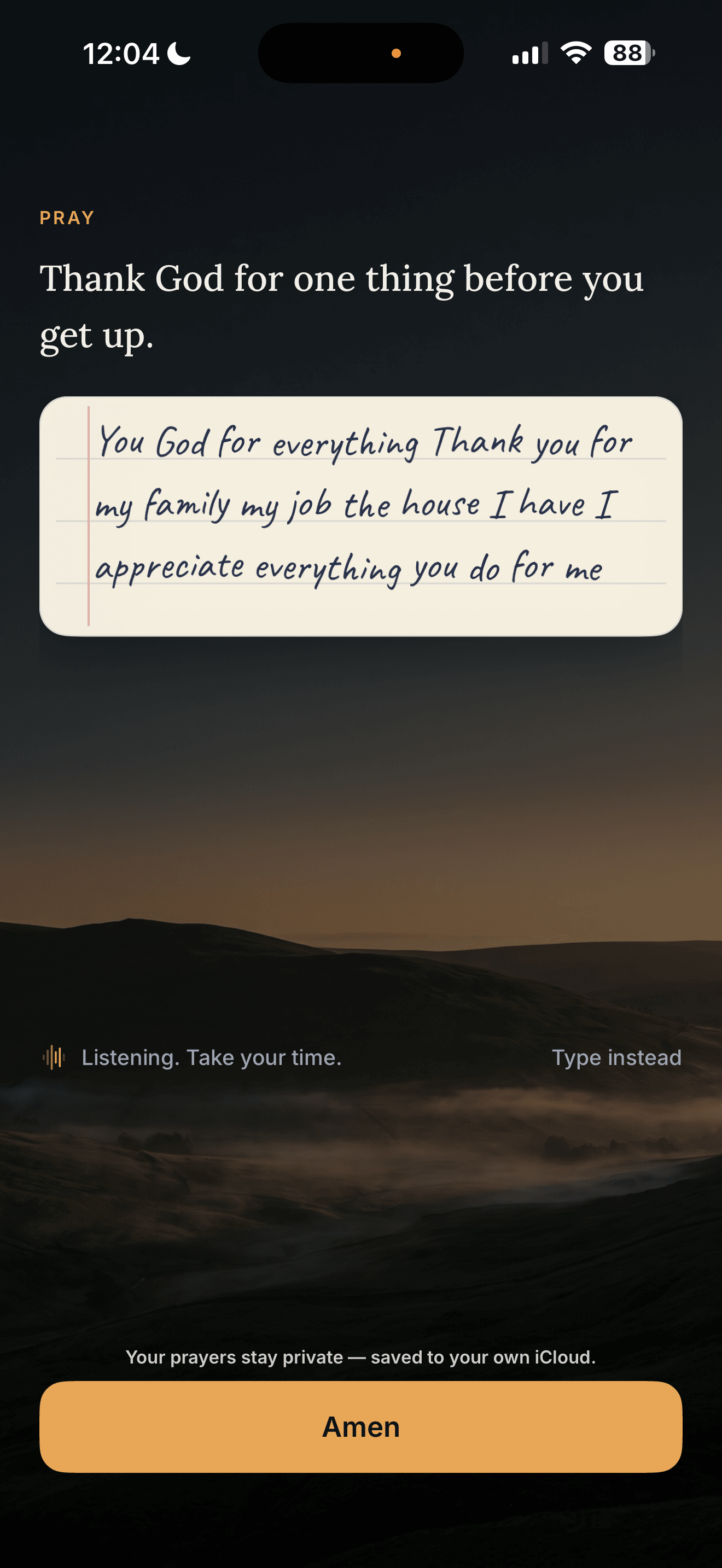
Frequently asked questions
What is Psalm 100 about?
Psalm 100 is a short psalm of praise and thanksgiving. It calls all the earth to make a joyful noise to the LORD, to serve him with gladness, to know that he made us and we are his people, and to enter his presence with thanks, because the LORD is good and his mercy is everlasting.
What does "make a joyful noise" mean?
It means to praise God out loud with joy. It isn't about musical skill. It's the glad sound people make when they celebrate, offered to God by everyone, everywhere.
Why is Psalm 100 called a psalm of thanksgiving?
The KJV heading reads "A Psalm of praise," but the Hebrew heading uses the word todah, which BibleHub's interlinear renders "of thanksgiving." The same word appears in verse 4, "Enter into his gates with thanksgiving."
How can I pray Psalm 100 every morning?
Start with verse 2 and ask for gladness in your work, thank God that he made you with verse 3, name things you're grateful for with verse 4, and rest on his goodness and mercy with verse 5. A Bible verse alarm can help you remember.
Sources and fact checks
- 01Psalm 100 (KJV) — Verbatim quotation checked on Bible Gateway, King James Bible Online and Bible Hub 2026-11-27 (5/5). Superscription "A Psalm of praise." from KJBO/Bible Hub (Bible Gateway does not display it). Divine name rendered LORD. KJV public domain in the U.S.
- 02Psalm 100, Bible Hub interlinear — Hebrew heading lethodah ("of thanksgiving"); same word (bethodah) in verse 4. Checked 2026-11-27.