Faith in daily life
How to put God first in the morning when your schedule is busy
Quick answer
Putting God first is not proved by a perfect wake-up time. Choose a small cue, one passage, and one prayer before the day’s demands become the loudest voice.
Start with the real morning in front of you
Busy mornings expose the difference between an ideal routine and a faithful one. You may be packing lunches, clocking in early, caring for someone, catching a bus, or working a shift that makes conventional morning advice useless. Scripture does not make 5 AM a measure of devotion. Matthew 6:33 calls believers to seek God’s kingdom and righteousness, while Colossians 3:17 points toward doing ordinary actions in the name of Jesus. The invitation is not to perform a picture-perfect quiet time. It is to let God have the first claim on your attention and obedience wherever your day actually begins. If your first usable moment is before children wake, use it. If it is five minutes in a parked car, use that. If you pray on a break after an overnight shift, that can be your morning before God. The faithful question is not ‘What does an impressive routine look like?’ but ‘What is the next honest opening in the life I have been given?’
Make the practice small enough to keep
Lower the friction until the practice has a chance to live. Put a Bible where you make coffee, save one short passage in a note, or choose one verse before going to sleep. Decide in advance what will happen after the alarm: sit up, take one breath, read, pray, then move. Specificity helps because a vague intention loses to urgent noise. But keep the plan gracious. A ten-minute plan with four steps can become a three-minute plan when a child is sick or a train is late. Read one sentence instead of a chapter. Pray one line instead of skipping entirely. You are not bargaining for God’s presence; you are practicing awareness of it. The purpose of the cue is not to earn credit. It is to make returning easier than drifting. When the routine is small enough to survive a difficult day, it can become a steady part of your life rather than another reason to feel behind. Notice the language you use when a day is full. Saying ‘I have no time for God’ may feel accurate, but it can hide smaller openings that are already there. The better question may be, ‘Where am I already giving my first attention, and can I offer one part of it back?’ This shift protects you from guilt and from self-deception. It also makes room for practices that fit a commute, a school drop-off, a hospital waiting room, or a break between shifts. Keep a short prayer written where you can see it. Read it before a meeting, then return to one sentence of Scripture afterward. If you have more time on another day, receive it as a gift rather than proof that you are finally doing faith correctly. The same God meets you in a quiet room and in a crowded kitchen. What matters is the honest turn of attention and the willingness to follow through in love.
Pray honestly and carry Scripture into the day
Give the few minutes a simple shape. First, receive: read Proverbs 3:5–6 and notice the invitation to trust rather than to manage every outcome. Second, respond: tell God what feels most urgent. Third, release: name one thing you cannot solve today and place it in God’s care. Fourth, obey: identify one act of love or integrity that belongs in the next hour. This might mean beginning an assignment, speaking gently during a rushed breakfast, leaving margin for a coworker, or refusing to fuel worry with endless scrolling. The actions are ordinary because most faithfulness is ordinary. A morning practice should make you more available to love God and neighbor, not more isolated in a private spiritual project. If your routine makes you impatient with everyone waiting for you, shorten it and bring its fruit into the room. It can help to make a weekly rather than daily plan. On Sunday or another quiet moment, choose five short passages, put them where you can find them, and write one line beside each about the coming week: a difficult meeting, a family responsibility, a decision, a person to serve. This does not predict the week. It simply gives your prayer a home when your mind is crowded. Invite people in your household into the plan only if it serves them; a spouse, child, roommate, or colleague should never be treated as an obstacle to your devotion. In a busy season, a shared thirty-second prayer may be more faithful than insisting on an uninterrupted private hour. Remember that rest, work, caregiving, and travel all change the shape of the practice. God is not waiting for you to create a more impressive life before he hears you. Begin in the life you have, then let Scripture teach you how to receive and serve within it.
Put this into practice with Koum
Koum can serve this kind of realistic routine by making the alarm itself a cue to encounter Scripture. Before an alarm ends, it can ask you to open, scan, speak, or type a verse; then it gives you space for prayer, a devotional, and a private reflection. Use a time you can actually keep, not a time borrowed from someone else’s life. Choose a verse that speaks to the week ahead, and let the alarm be a door rather than a demand. Koum does not determine whether you put God first, and it cannot replace worship, community, or pastoral care. It can reduce one barrier: the gap between waking up and remembering what you wanted your day to be about. On a busy morning, that small reminder may be enough to help you begin with trust instead of reaction. When a season is unusually crowded, ask one trusted person to pray for your specific morning. Receiving prayer can keep a small practice from becoming another solitary burden. The goal is not to protect a private ritual; it is to seek God’s kingdom in the very responsibilities that make the day full.
Put this into practice with Koum.
Koum asks you to open, scan, speak, or type a Bible verse before the alarm ends. Then it gives the morning room for prayer, a devotional, and a private reflection.
Get Koum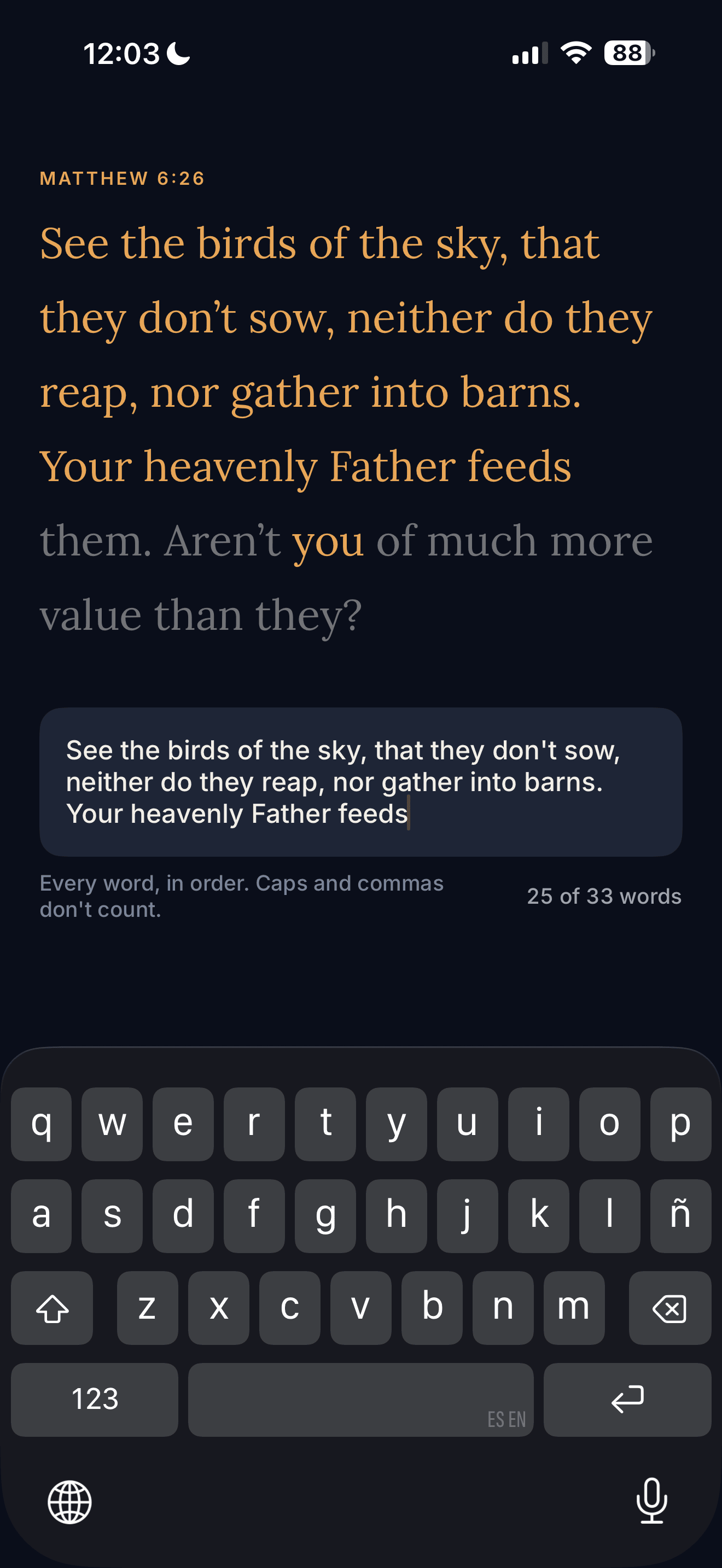
Frequently asked questions
Do I have to wake up early to put God first?
No. Scripture calls people to seek God, not to copy one cultural schedule. Choose a consistent moment that respects your responsibilities and sleep needs.
What should I do when my morning is interrupted?
Keep a smaller version ready: one verse, one sentence of prayer, and one faithful next step. Return to a longer practice when life allows.
Sources and fact checks
- 01Matthew 6:33, NIV — Jesus’ instruction to seek God’s kingdom and righteousness.
- 02Colossians 3:17, NIV — A framework for ordinary actions done in Christ’s name.
- 03Proverbs 3:5–6, NIV — A call to trust God rather than lean only on personal understanding.
- 04Koum support — Verified product capabilities and limits.