Bible alarm
How to use an alarm as a cue for prayer, not just another notification
Quick answer
Set one realistic alarm, decide the Scripture and prayer that follow it, keep the phone out of the scroll loop, and choose one next action. The alarm is a cue, not a spiritual test.
Start with the real morning in front of you
An alarm already has power in your day because it interrupts sleep and asks for a decision. Most alarms end with a swipe, then the phone immediately offers messages, feeds, and unfinished work. You can give that cue a different meaning without pretending that a sound itself is spiritual. Romans 12:11–12 calls believers toward spiritual fervor, hope, patience in affliction, and faithfulness in prayer. Ephesians 5:15–16 speaks about living carefully and making the most of time. Neither passage is an instruction to engineer a perfect morning. They are invitations to live attentively. An alarm can become a small, practical reminder of that attention: before you take in everyone else’s urgency, you take one moment to remember whose you are. The purpose is not to turn waking up into a performance. It is to place a small interruption between sleep and reactivity.
Make the practice small enough to keep
Design the cue before you need it. Pick a wake time that respects your responsibilities and leaves room for enough sleep; the CDC explains that sleep is an important part of general health and well-being. Put the phone across the room if that helps you stand up, but keep any alarm plan proportionate to your needs. Decide what happens in the first two minutes: turn off the alarm, sit up, read one passage, and pray one sentence. A plan this simple is more likely to survive a rushed Tuesday than an elaborate ritual. Keep the first text ready before bed. You might choose Romans 12:12, Psalm 143:8, or a passage you are studying with your church. The goal is not novelty. Repetition can let a truth become familiar enough to return when the day becomes noisy. If you share a room or live with people on a different schedule, make the cue considerate. Use headphones for audio, choose a gentle alarm sound, or move to another room for a longer prayer when possible. A practice that regularly harms someone else’s rest is not automatically more faithful because it is religious. Likewise, pay attention to when the alarm should be disabled: recovery from illness, a needed day off, travel, or an unusual work schedule may call for rest. Planning rest is part of receiving life as a gift. The cue is meant to create attention, not to become a rigid demand. If you find yourself anxious about missing it, return to the purpose. God is not absent because your alarm did not ring. The practice is there to serve a relationship already sustained by grace.
Pray honestly and carry Scripture into the day
Protect the transition after the alarm. If notifications are the next thing you see, your attention may be claimed before you make any deliberate choice. Consider a short period before opening social apps, news, or email. During that time, read, pray, and identify the next responsible task. This is not a rule for judging people who need their phone for family, work, accessibility, or emergencies. It is a question worth asking: what do I want to train my first attention toward? A brief prayer might be, ‘God, help me receive this day and use it with love.’ Then let your response become practical. Make breakfast, begin a commute, send the necessary message, or start the assignment. Prayer should not make you less present to the work and people in front of you. It should help you carry them with greater honesty and care. Review the cue after a few days with curiosity rather than judgment. Does the alarm leave enough time for rest? Does the chosen passage invite attention, or have you learned to rush through it? Are notifications still pulling you away before you can pray? Change one practical detail at a time: move the phone, choose a shorter verse, prepare coffee later, or leave the Bible open. Do not turn every adjustment into a verdict about your character. Practices need fitting, especially in seasons of illness, parenting, travel, grief, or shift work. An alarm is useful only when it serves life, and Christian prayer is meant to move you toward love. If the cue makes you more hurried or self-critical, make it smaller. If it makes space for gratitude and a wiser first response, keep it. The best routine is not the most dramatic one; it is the one that helps you keep returning.
Put this into practice with Koum
Koum is built for this exact transition. Its Bible alarm can ask you to open, scan, speak, or type a Scripture verse before the alarm ends, followed by space for a devotional, prayer, and private reflection. It does not force anyone awake, prevent oversleeping, offer clinical sleep coaching, or replace a backup alarm for something with serious consequences. Use a second alarm when you absolutely cannot be late, as Koum’s support guidance recommends. What Koum can offer is a different first interaction: Scripture rather than a random notification. Choose a realistic time, select a passage, and try the routine for one week without scoring yourself. Notice whether the cue makes it easier to pause. That is enough reason to keep refining it. Keep the alarm cue accountable to love. If it helps you enter the day with patience, gratitude, and readiness to serve, it is serving its purpose. If it becomes a source of fear or conflict, make it gentler. The cue is yours to adapt; grace is not conditional on its success.
Put this into practice with Koum.
Koum asks you to open, scan, speak, or type a Bible verse before the alarm ends. Then it gives the morning room for prayer, a devotional, and a private reflection.
Get Koum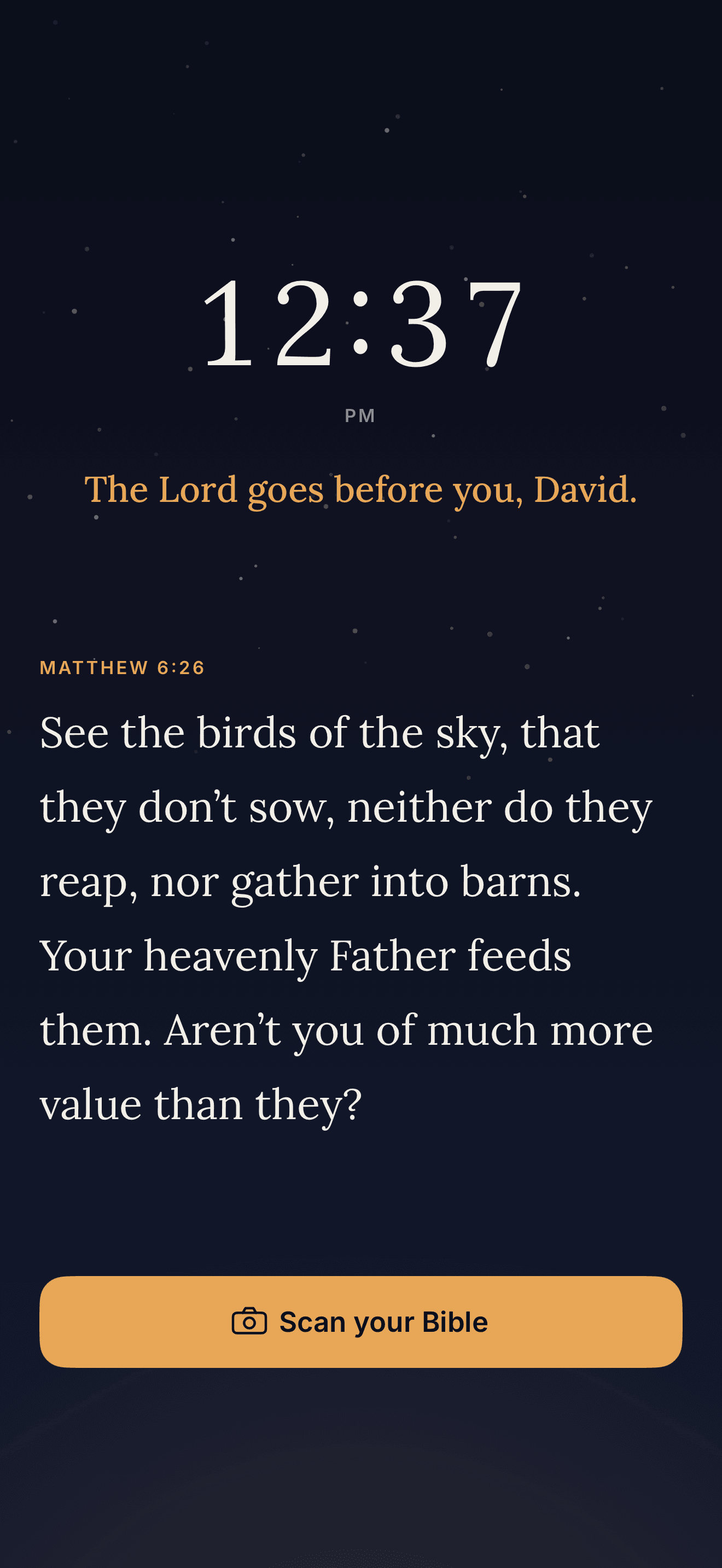
Frequently asked questions
Can an alarm make me more spiritual?
No. An alarm is only a cue. It can support a chosen practice, but spiritual growth is not produced by a notification or measured by an app streak.
Should I use a backup alarm?
Yes, especially for flights, medication, work shifts, exams, or anything with serious consequences. Do not depend on a single phone alarm.
Sources and fact checks
- 01Romans 12:11–12, NIV — A call to hope, patience, and faithfulness in prayer.
- 02Ephesians 5:15–16, NIV — A call to live carefully and use time wisely.
- 03CDC: About Sleep — General public-health context for sleep, not a claim that Koum is sleep treatment.
- 04Koum support — Verified alarm guidance and feature limits.