Morning Bible reading
How to Stop Hitting Snooze and Read the Bible in the Morning
Quick answer
Stop snoozing by protecting enough sleep, putting the alarm out of reach, preparing a short passage, and making your first action physical. Begin with five minutes of Scripture and prayer, then adjust the schedule until it is repeatable.
The short answer: stop negotiating with the alarm
If you keep pressing snooze and missing your Bible reading, the answer is not to shame yourself into becoming a different kind of person. Protect enough sleep, move the alarm out of arm’s reach, prepare a very small passage the night before, and make the first action physical: sit up, put your feet on the floor, and turn toward the light. Your morning reading can begin with five focused minutes. The goal is a repeatable handoff from sleep to Scripture, not a dramatic test of devotion.
Choose a wake time that fits your actual responsibilities. If you cannot wake without several alarms, treat that as information about your sleep and schedule rather than a moral failure. Move bedtime earlier, move the reading time later, or shorten the first session until you can keep the promise. A Bible habit grows through returning tomorrow, not through winning one exhausting morning.
Start with enough sleep, not stricter discipline
The Centers for Disease Control and Prevention says most adults need at least seven hours of sleep each night and recommends a regular schedule. That matters for a Scripture-first morning because an alarm cannot create rest that you never allowed yourself to receive. If you are regularly sleeping too little, the snooze button may be revealing a real need for more sleep, not a lack of spiritual motivation. Teenagers, children, and people with particular health needs have different sleep requirements.
Begin with a seven-day experiment. Write down the time you need to get up, count backward far enough to leave yourself a realistic sleep window, and start winding down before bed. The NHLBI recommends going to bed and waking up around the same time each day, keeping the bedroom quiet, cool, and dark, and using the hour before bed for quiet time. Do not change your wake time by an hour and then expect a perfect devotional the next morning. Adjust in small steps and let consistency do the work.
Make the snooze button inconvenient
Snooze wins when it is the easiest action available. Put your phone or alarm across the room so you must stand to turn it off. Leave a glass of water beside the Bible, place your reading plan where you can see it, and decide the passage before your head touches the pillow. The point is not to punish yourself; it is to remove a half-awake negotiation that you have already decided you do not want.
Keep the first minute simple. Stand up, turn on a soft light or open the curtains, drink water, and go to the place where you will read. Do not begin by opening social media or email, because those apps offer a faster reward than a quiet page. If your phone must be the alarm, set it so the alarm screen is the only decision waiting for you. Once you are upright, your planned next step should be visible.
Use a five-minute Scripture-first beginning
A small beginning is not a shallow beginning. Pick a short passage or a few verses and read them slowly once. Then read them again, asking one question: what does this show me about God, people, or the way I should live today? Finish with one honest sentence of prayer. You do not need to complete a chapter before the morning counts.
The Bible gives several pictures of morning attention. Psalm 5:3 describes bringing a voice and expectation to God in the morning. Mark 1:35 describes Jesus going to a quiet place to pray before the day’s demands. Psalm 119:147 connects rising early with hoping in God’s word. These passages do not give every Christian one mandatory clock time. They give a direction: make room for God before the day becomes loud.
Try this sequence for the first week: one minute to get up and settle, two minutes to read, one minute to notice a phrase, and one minute to pray. If you have more time, continue. If you do not, end with a sentence you can carry into the day. A short practice you repeat is more useful than an ambitious plan you abandon.
Use an alarm that asks you to engage
A normal alarm asks for one decision: silence it. A Scripture-first alarm can make the next decision part of the habit. Koum asks you to open, scan, speak, or type a Bible verse before the alarm ends. That supported behavior gives you a concrete transition from hearing the alarm to handling Scripture. It does not replace sleep, and it does not guarantee that every morning will feel easy. It simply puts the verse in the first minute instead of leaving the phone as the only object you reach for.
If you use Koum, choose a wake time that leaves room for your real morning, then choose a verse or reading direction you can meet consistently. The current alarm screen shows the alarm ringing with a Psalm reference and an invitation to scan your Bible. That is useful when your problem is not knowing what to read but moving from intention to action. After the alarm, continue with prayer, a devotional, or a short reflection if your schedule allows.
The app should serve the habit, not become another source of pressure. Start with the interaction you are most likely to complete. The aim is not to prove that you can make mornings difficult; it is to give your attention a better first destination than the snooze button.
Try a seven-morning reset
For mornings one and two, keep the wake time modest and place the alarm across the room. Read one short passage and write down one phrase. For mornings three and four, keep the same wake time and add one sentence of prayer before you touch any other app. For mornings five and six, prepare the next passage before bed and notice what makes getting up easier or harder. On morning seven, review the week without grading your holiness: when did you sleep enough, what alarm placement helped, and what reading length could you keep?
If you miss a morning, do not double the reading or set an earlier alarm to compensate. Resume at the next planned wake time. A missed day is a scheduling problem to learn from, not proof that the habit is fake. You might need a later reading time on workdays, a different plan on weekends, or a shorter passage during a demanding season. Faithfulness can include adapting the practice so it remains honest.
When snoozing points to a bigger sleep problem
One rough morning is ordinary. Persistent difficulty waking, severe daytime sleepiness, loud snoring, gasping during sleep, or regularly needing many alarms deserves more attention than a productivity trick. Keep a simple sleep note for a week and talk with a qualified health professional if the pattern continues. Do not cut sleep further to force a devotional habit.
The Christian purpose of a morning routine is not to win a contest against your body. It is to receive the day with attention, prayer, and Scripture when that timing genuinely serves you. Some people meet God before sunrise; others read after children leave, during a lunch break, or at night. Start with the time you can keep, remove the snooze negotiation, and let the practice become a place you return to.
Put this into practice with Koum.
Koum asks you to open, scan, speak, or type a Bible verse before the alarm ends. Then it gives the morning room for prayer, a devotional, and a private reflection.
Get Koum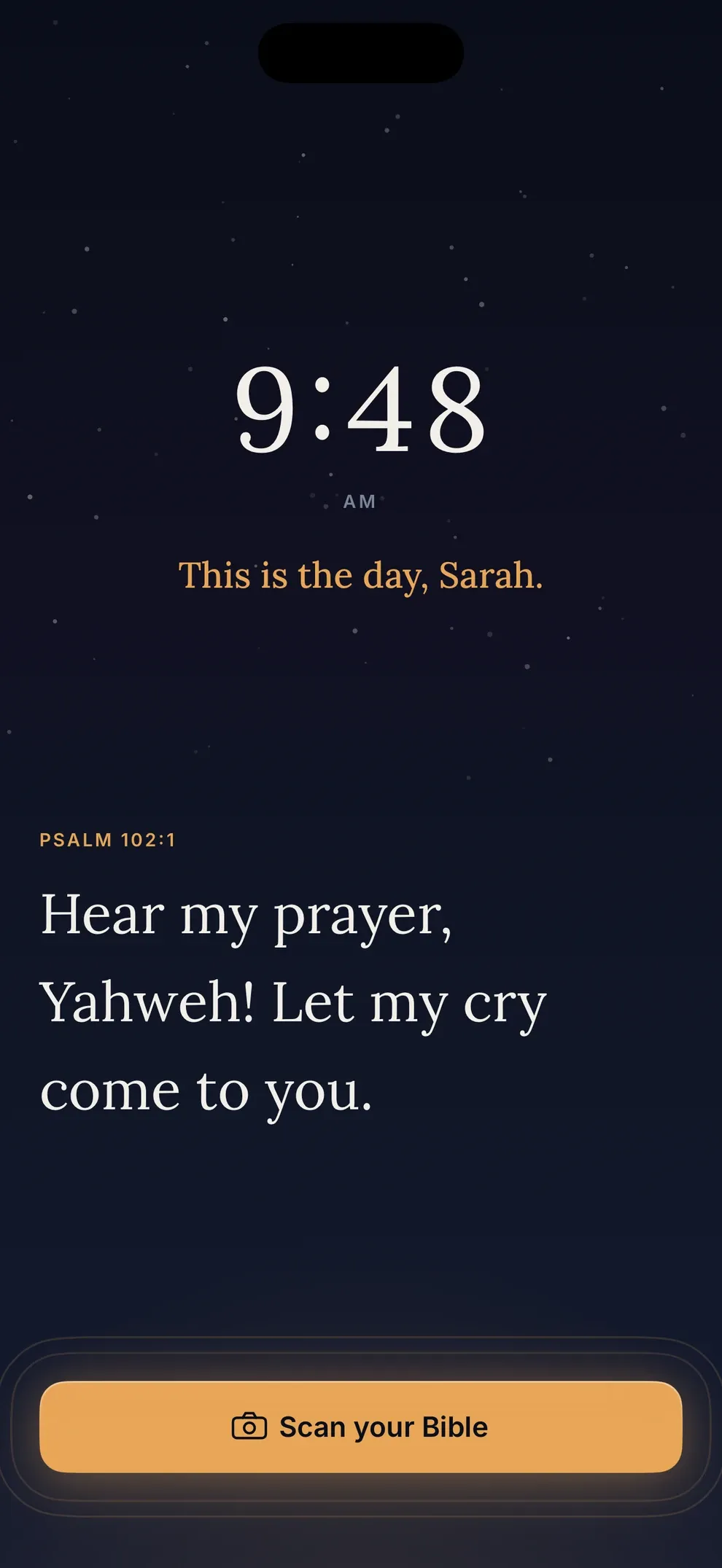
Frequently asked questions
Is it wrong to use the snooze button before Bible reading?
No. Snoozing is not a spiritual failure. It may be a sign that you need more sleep or a schedule that fits your body. Start by protecting your sleep, then make the first reading step small and easy to repeat.
How long should morning Bible reading take if I keep oversleeping?
Start with five focused minutes: read a short passage, notice one phrase, and pray one sentence. Add time only after you can keep that beginning consistently. A short practice is better than a long plan you regularly abandon.
Can Koum replace a regular alarm?
Koum is designed to make waking Scripture-first: it asks you to open, scan, speak, or type a Bible verse before the alarm ends. It does not replace sufficient sleep or address a health-related sleep problem, but it can give your first minute a concrete next step.
Sources and fact checks
- 01CDC: About Sleep and Your Heart Health — At least seven hours for most adults and a regular sleep schedule.
- 02NHLBI: Healthy Sleep Habits — Consistent sleep and wake times, quiet bedtime routines, and a sleep-friendly room.
- 03Effects of Using a Snooze Alarm on Sleep Inertia — A small laboratory study on repeated snooze alarms and sleep inertia.
- 04Is Snoozing Losing? — A later study finding that brief snoozing may have mixed effects; evidence is not a universal rule.
- 05Bible Gateway: Psalm 5:3, Mark 1:35, Psalm 119:147 — Morning prayer, Jesus seeking a quiet place, and rising early to hope in God’s word.