Bible reading
Bible verses to read in the morning: a 7-day starting plan
Quick answer
Choose one passage each morning, read it in context, write one observation, pray one response, and carry one small phrase into the day. Depth matters more than speed.
Start with the real morning in front of you
A list of Bible verses can become another set of inspirational fragments unless you slow down enough to ask what each passage is saying. This seven-day plan is designed as a beginning, not a replacement for reading whole books of the Bible. On day one, read Psalm 90:14 and notice that the prayer is rooted in God’s steadfast love, not in the idea that every morning will feel easy. On day two, read Lamentations 3:22–23 with the verses around it. The speaker is not ignoring suffering; he is remembering God’s mercies in the middle of it. On day three, read Isaiah 50:4 and consider how a listening disciple can receive a word that sustains the weary. Each day, resist the pressure to extract a slogan. Read the verse, glance at the surrounding paragraph, and ask what the original movement of the passage reveals about God and the human need before you.
Make the practice small enough to keep
For days four through seven, try Psalm 143:8, Proverbs 3:5–6, Matthew 6:33, and Romans 12:11–12. Each gives a different morning lens: asking for guidance, trusting God beyond your own understanding, seeking God’s kingdom, and continuing in hope and prayer. The variety matters because mornings are not identical. One day you need direction; another day you need courage; another day you simply need to remember that worship is not an escape from responsibility. Keep a small card or note with four prompts: What word or action stands out? What does this passage say about God? What does it invite me to trust or obey? Who might need this truth from me today? The prompts are not meant to manufacture a profound answer. They make room for attention, which is often the first gift we can offer to Scripture. Keep your Bible open to questions as well as comforts. A morning passage may expose an assumption, call you to repentance, or invite patience with a mystery that cannot be settled before work. When that happens, do not abandon the plan or force a cheerful conclusion. Write the question in the margin of a notebook: ‘What does this mean in context?’ ‘How does this connect to Christ?’ ‘How should this change my response to another person?’ Then seek answers slowly through reliable study, worship, and conversation. This approach guards against treating the Bible as a collection of private messages. It also lets a seven-day plan become the beginning of longer discipleship. The verse you read while half awake may return later during a disagreement, a decision, or a moment of gratitude. That return is not magic; it is the patient work of remembering what you have received.
Pray honestly and carry Scripture into the day
A seven-day plan should leave space for prayer. After reading, paraphrase the passage to God in your own words. From Psalm 143:8 you might pray, ‘Let me hear your love this morning and show me the way I should go.’ From Proverbs 3 you might pray, ‘I do not understand every turn ahead; help me acknowledge you in the one I can take now.’ Then choose one embodied response. Send encouragement, prepare for work with integrity, stop rehearsing a fear, or make time to listen to someone. Scripture is not a productivity hack. It is God’s Word received by people who need formation over time. When you cannot tell whether a verse has ‘worked,’ return to it. The aim is not to create a morning high. The aim is to become more truthful, loving, and ready to follow Christ in ordinary places. At the end of seven days, do not rush to a new plan simply for variety. Read back through your notes and look for questions, repeated needs, or passages that still feel unfinished. Choose one to revisit in its larger biblical setting. You might read the whole psalm, chapter, or Gospel scene and compare what you first noticed with what becomes clearer now. If a phrase comforts you, ask whether the passage also calls you to something. If a phrase challenges you, ask whether you are reading it in light of God’s mercy rather than as a weapon against yourself or others. Share one question with a trusted Christian friend or small group. Scripture is given to the church, not just to isolated readers. A modest plan becomes richer when it opens you to wiser conversation, patient study, and a life that actually responds to what you have read.
Put this into practice with Koum
To make the plan easier to keep, tie it to a real cue instead of a vague promise. Koum can make your alarm that cue by asking you to open, scan, say, or type a Bible verse before the alarm ends. You can use one of the seven passages as the verse you meet first, then continue into a devotional, prayer, or private reflection. Koum does not interpret Scripture for you or replace thoughtful study, a local church, or trusted teachers. It can help you keep the first interaction of the day close to the text rather than to a feed. If a day is missed, continue with the next passage rather than restarting the whole plan. The point is not a flawless streak. It is a week of returning to Scripture with enough patience to hear it. If you want to continue, choose one biblical book next rather than collecting another list. A Gospel or a short letter gives verses their larger story. Keep the same slow questions and let continuity, not novelty, guide the next week of reading.
Put this into practice with Koum.
Koum asks you to open, scan, speak, or type a Bible verse before the alarm ends. Then it gives the morning room for prayer, a devotional, and a private reflection.
Get Koum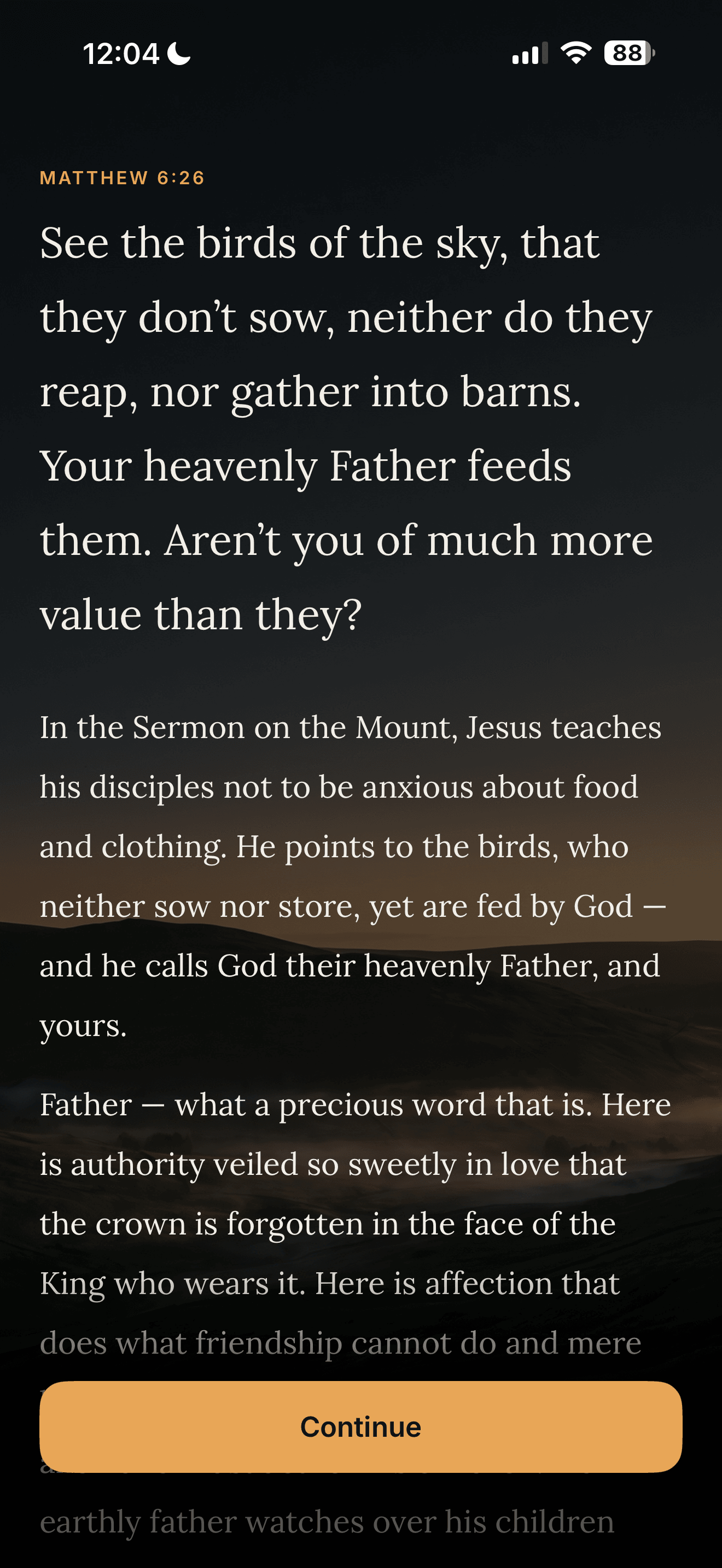
Frequently asked questions
Should I read only one Bible verse in the morning?
One verse can be a useful doorway, but read the surrounding verses whenever possible so you do not detach it from its context.
What if I do not understand the passage?
Write the question down, consult a reliable study resource, and bring it to a pastor, teacher, or mature Christian friend instead of forcing a quick answer.
Sources and fact checks
- 01Isaiah 50:4, NIV — A passage about listening and sustaining the weary.
- 02Psalm 90:14, NIV — A prayer shaped by God’s steadfast love.
- 03Lamentations 3:22–23, NIV — A remembrance of God’s mercies within a lament.
- 04Koum support — Verified product capabilities and limits.