Devotional practice
Do You Need a Morning Devotional, or Should You Start With Scripture?
2026-09-15
Quick answer
You do not need a morning devotional to begin. Read a short, connected passage of Scripture first, then use a devotional if it helps you understand the text, pray, or choose a faithful response. A guide should point you back to the Bible, not replace it. Keep a full, ordinary, and tired-morning version of the practice so you can return without turning the habit into a performance.
Yes, you can use a morning devotional, but you do not need one to begin meeting God in the morning. Start with Scripture itself, then use a devotional if it helps you notice, understand, pray, or respond to what you have read. A devotional is a companion, not a substitute for the Bible. If you have ten minutes, read a short passage, remain with one idea, and answer God honestly. If you have two minutes, read a few connected verses and carry one line into the day. Faithfulness is not finding the perfect resource. It is returning to Scripture with an open heart.
Short answer: Scripture comes first
A devotional usually gives you a selected verse followed by an explanation, reflection, prayer, or question. That can lower the friction of beginning, especially when you are learning how to slow down. But order matters. If you read only another person’s paragraph, you can receive their conclusion without paying attention to the passage that led there. Open the biblical text first. Read enough to see who is speaking, what is happening, and what the passage emphasizes. Then let the devotional help you look again rather than tell you what you must feel. Some mornings the passage and a simple prayer will be enough.
What a devotional can do—and what it cannot
A good devotional can offer context, name a question, or give language to a prayer you do not yet know how to form. On a tired morning, that gentle invitation may help you stay with the text instead of abandoning the practice after a distracted glance. It can also offer a second voice when you miss a connection to the surrounding story. The Bible describes receiving the word as something that should move toward faithful living. James warns against hearing and then forgetting, using the picture of looking in a mirror and walking away without remembering what you saw.
What a devotional can do—and what it cannot
A devotional is most useful when it supports that movement from attention to action. It cannot make your morning spiritually successful by itself. Reading several pages does not guarantee a particular emotion, and skipping a devotional does not mean you skipped God. It cannot replace the biblical passage, the wisdom of a healthy Christian community, pastoral care, or obedience in ordinary life. It also cannot eliminate every difficult question. Leave room for an honest sentence such as, “I do not understand this yet,” or, “I need help living this today.”
What a devotional can do—and what it cannot
The Catechism describes Sacred Scripture, particularly the Gospels, as a help for meditation and describes a method as a guide rather than the goal. That gives you freedom to use a devotional without becoming dependent on one format. A guide should make you more attentive to God and more truthful about your neighbor, your responsibilities, and your own heart, not more dependent on a writer’s confidence. If a resource makes you feel that God is disappointed unless you complete a checklist, reconsider it.
Build a Scripture-first morning in ten minutes
You do not need a long routine to begin. First, arrive: put the phone on do-not-disturb, take one breath, and remember that you are turning your attention toward God, not completing a performance review. Second, read a connected passage—a paragraph, a short scene, or a psalm rather than unrelated lines. Read once for the whole movement and again for one detail. Matthew records Jesus saying that people do not live by bread alone but by every word that comes from God. Receive before you rush to produce an answer.
Build a Scripture-first morning in ten minutes
Third, notice before you interpret. Ask who is present, what changes, what repeats, and what the passage reveals about God, Jesus, people, or faithful living. If you are reading a Gospel, stay close to the story. If you are reading wisdom literature, ask how its image or instruction is shaping your attention. If you are reading lament, do not force it to sound cheerful.
Build a Scripture-first morning in ten minutes
Fourth, pray in response. Thank God for something the passage gives you, confess where it exposes a gap, ask for help, or pray for another person. Your prayer can be plain. Scripture-first does not mean emotionless or academic; it means the words of the text have the first opportunity to shape your words. Fifth, choose one carry-forward action: listen before answering, ask for wisdom, encourage someone, or return to the passage at lunch.
Use the devotional after the passage
Once you have read the text, open the devotional. Read it as a conversation partner and test its emphasis against the passage. Does it respect the context? Does it point you toward Jesus and a truthful response? Does it leave room for questions? If it quotes one sentence, look at the paragraphs around it. A reflection can be warm and moving while still being too narrow for the text it cites.
Use the devotional after the passage
You do not have to finish every reflection. Keep what helps you attend and set aside what does not fit your season or tradition. Some mornings the devotional will give you language for prayer; other mornings the passage itself will be enough. The goal is not protecting a streak of pages. The goal is returning to the conversation between Scripture, prayer, and life. A devotional may begin the conversation, but it should not become the object of the conversation.
Choose a guide that points back to Scripture
Look for a clear Bible reference and enough context to help you find the passage. Prefer reflections that distinguish what the text says from what the writer is applying. That protects you from treating one person’s experience as a command for every reader. Look for honesty about grief, doubt, unanswered prayer, and the limits of a short reflection. A mature guide does not need to turn every verse into a productivity lesson or promise that your circumstances will change if you read correctly.
Choose a guide that points back to Scripture
Choose a format you can actually return to. A printed book may protect your attention. A Bible app may keep the passage close while you travel. A short daily guide may help when you feel scattered. The best resource is not the one with the longest commentary. It is the one that keeps Scripture visible and leaves you more ready to pray and act. The Catechism’s picture of meditation involves thought, imagination, emotion, and desire, not a quota of pages.
Keep the practice flexible
Build three versions of the same practice. Your full version might be fifteen minutes: read the passage, read the devotional, pray, and journal. Your ordinary version might be eight minutes: read, notice one thing, and pray. Your tired version might be two minutes: read three verses aloud and ask God for help to live one word faithfully. A short practice you can repeat is better than an ideal routine that makes you avoid Scripture when the morning changes.
Keep the practice flexible
Prepare the night before. Choose the passage, put the Bible where you will see it, and decide what enough means. If children, work, illness, or a night shift changes your schedule, move the practice to the first calm part of your waking day. When you miss a day, do not spend the next morning paying interest on guilt. Open the passage you planned, or begin again with a psalm or Gospel scene. A rhythm gives you a place to return.
How Koum can hold the sequence
Koum is designed for a Scripture-first morning on iPhone. Its alarm can ask you to open and verify a selected Bible passage by scanning the page, reading the verse aloud, or typing it. After the alarm is addressed, its flow can leave room for prayer, a short devotional, and private reflection. That makes it a cue and structure for the sequence described here; it is not a Bible replacement, theological authority, or promise that every morning will feel calm. Your notebook, church, pastor, and ordinary relationships still matter.
Questions before you close the book
Ask: What did I actually read? What does it show about God or faithful living? What question remains? What is one response I can practice today? If you used a devotional, ask one more question: Did it help me see the passage, or did it replace the passage? You do not have to choose between a devotional and a serious Bible-reading life. Begin with the text, receive help where help is useful, pray honestly, and carry one response into the day. Some mornings will be rich; some will be brief. Both can become places where you return to God with Scripture open.
Put this into practice with Koum.
Koum asks you to open, scan, speak, or type a Bible verse before the alarm ends. Then it gives the morning room for prayer, a devotional, and a private reflection.
Get Koum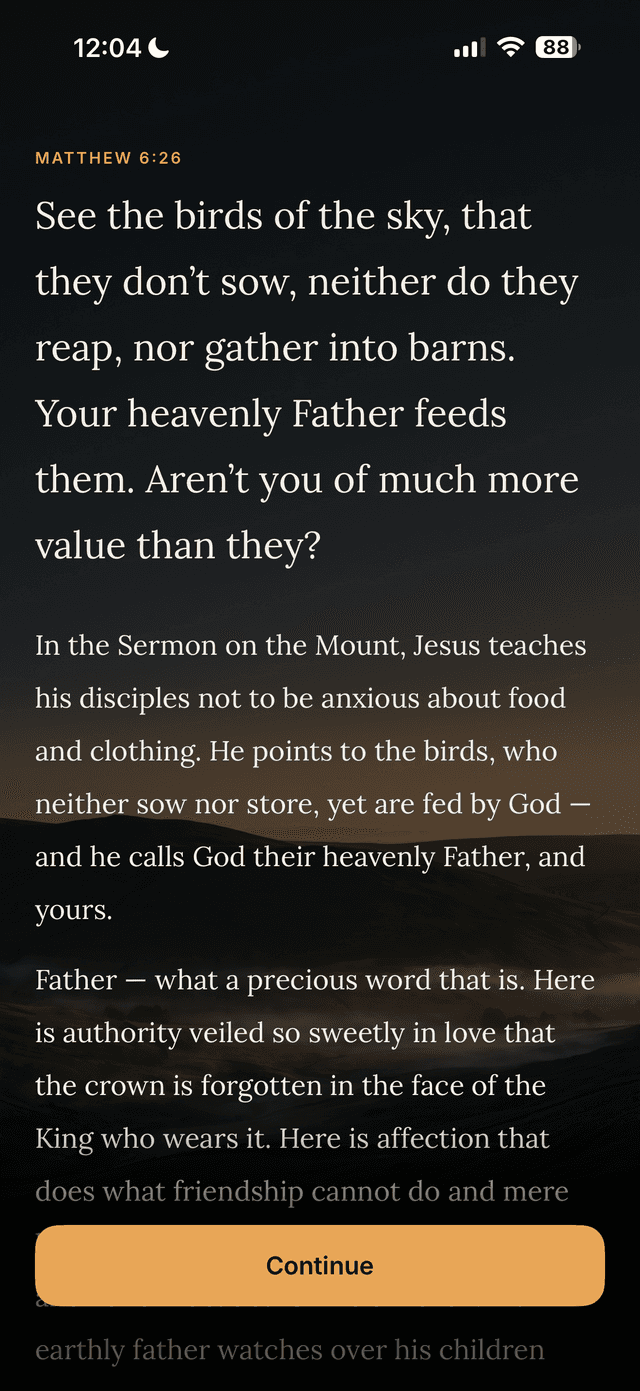
Frequently asked questions
Should I read the Bible or a devotional first in the morning?
Read the Bible passage first when possible. Then use the devotional as a companion that offers context, a question, or language for prayer. This keeps the guide connected to the text instead of allowing someone else’s summary to replace your own attention to Scripture.
What should I do if I do not have time for a full devotional?
Read a few connected verses, name one thing you noticed, and pray one honest sentence. You can use a short devotional later or return to it at lunch. A brief practice you can repeat is better than a demanding routine that makes you avoid Scripture when the morning changes.
Can Koum replace a Bible or devotional?
No. Koum is a Scripture-first alarm for iPhone that can verify a selected passage and leave room for prayer, a short devotional, and reflection. It is a cue and structure for your morning, not a replacement for the Bible, Christian community, pastoral care, or a devotional resource.
Sources and fact checks
- Vatican Catechism: Meditation: Supports Scripture as a help for meditation, methods as guides, and meditation as a whole-person response.
- 2 Timothy 3:16–17 (WEB): Supports Scripture’s role in teaching, correction, and equipping a person for good work.
- Matthew 4:4 (WEB): Supports Jesus’ teaching that life is sustained by every word from God.
- James 1:21–25 (WEB): Supports receiving the word and moving from hearing toward faithful action.
- Psalm 1:1–3 (WEB): Supports a patient, rooted picture of delighting in and meditating on God’s instruction.
- Koum Support: Verifies Koum’s Scripture-first alarm, prayer and reflection flow, and first-party product guidance.